Spring 2018
Anxiety or Readiness—How Will You Live?
Is there really an alternative to anxiety? And isn’t this thought pattern / emotional reaction / body state an intelligent response to our fast-changing, uncertain times?
Featured Article • Anxiety or Readiness—How Will You Live?
Anxiety or Readiness—How Will You Live?
by James Flaherty
Anxiety here means:

- Relentless, continuous, worrisome thoughts about the future, i.e. inventing endless threatening “what if?” scenarios and imagining our response to them. These thoughts have superglue stickiness and rapid cycle times. They keep going and going, sometimes even in our sleep, and frequently forming the basis of our conversations with our family, loved ones and close colleagues. Sharing our anxiety frequently substitutes for genuine intimacy.
- Our bodies being in some state of fight or flight with the accompanying stress hormones—we feel jumpy, agitated, off-center. After a short period, we become used to this state and start to feel anxious when it’s not there. Our bodies readily respond with this experiential state to worrisome thoughts, and we then begin to be concerned about that state so more worrisome thoughts are generated. Around and around we go. When anxious we often don’t eat as well as necessary nor sleep as much as we need. Both contribute to our more easily feeling anxious.
- Our emotions keep bringing our attention back to phenomena that our nervous system has identified as potentially dangerous. Anxiety as described fits that criteria. Consequently, even though we don’t like it, or think it would be better to release it, our focus keeps coming back to anxiety.
- Besides what’s above, our nervous system concludes that there must be something wrong because we are feeling anxious. This has us redouble our efforts to scenario-plan our way out of it.
Sound/feel familiar?
When caught in the cycle we feel, in our body and emotions, that it’s very dangerous to let go of anxiety since something terrible might happen (the internal logic is that we must be anxious because something bad is about to happen) if we are not endlessly considering what might occur and preparing ourselves for it. Like I said, it feels intelligent to be anxious.
Worrying and planning only lead to more of the same.
Or you could take up this alternative. Prepare your mind, heart and body for what’s coming—inevitably coming.
For those of you who have done our Professional Coaching Course, you know this list well:
We are going to get old.
We are going to get sick.
We are going to die.
We are going to lose all of our relationships and all our possessions.
(And this is true for everyone we love)
And we know these truths deeply, even as we attempt to mitigate their importance or deny their reality.
We get anxious about smaller matters, being late for a meeting, running out of money, concluding that we are not doing so well compared to others and so on. I propose that these anxieties are subsets, shadow manifestations of the big four listed.
How, then, do we prepare?
We prepare by cultivating a body, mind and heart that can tolerate searing loss. We can intentionally build / generate a deep presence that can abide, can accompany us and others in the midst of these horrible events.
Shifting beliefs alone will not be sufficient for many of us. Maybe you’ve experienced this yourself, when in the midst of a world-collapsing loss (often the unexpected, out-of-sequence death of a beloved), some well-meaning person offers a bromide like, “It’s all happening for a reason” or “Something great is going to happen now.”
I am strongly recommending this decades-long path. Here are some of the steps.
First Aid
- Learn, through close observation followed by rigorous experimentation, how to disrupt your own patterns of anxiety.
- What are your patterns of anxiety? Around what relationships? What activities? What events in the world?
- What patterns of stress, neglect of self-care are the seedbeds of anxiety?
- Which somatic interventions disrupt / stop the anxiety in the moment? Slow, deep breathing? Sensing into your body? Focusing your attention closely on an object in your immediate environment? Gazing at the sky? Exercising (aerobically, energetically, stretching)? Getting a massage? Being with someone you love? Being with your pet dog or cat? What works for you?
In The Background
- Attend to your body, relationships, physical environment so that they are supportive.
- Begin keeping track of the difficult experiences that you have been in and deeply registering that you survived, are okay afterwards.
- Find people with whom you can have deep conversations—with whom you feel safe and articulate and from whom you are open to receiving guidance, support, feedback. Such people may already exist in your life; I urge you to take care of your relationship with them. If they don’t, please begin experimenting with the people you know in order to find the ones with whom you can have these types of conversations. Sometimes it will have to be a professional person, someone in your spiritual community, a therapist or coach.
- At a speed that suits your body–mind, be around people in the midst of painful loss—volunteer at a hospice, get trained to work at a suicide hotline, become skillful at working with people with trauma. If this list is too steep for you, find alternatives and slowly—never forcing yourself—discover your wherewithal to be present in difficult situations.
Ongoing
- Take up a spiritual practice that reveals your true nature. Practically, this means being a practitioner in the mystic side of spiritual lineages—the group of people who engage practices that give them the experience of the teaching well beyond doctrinal understanding.
- Grow deep roots—physically connect to nature, join a heartfelt group dedicated to others, experientially explore the depths of your own body-mind, notice and live in the reality that everyone and everything is co-creating each other.
What would you add?
Please do not neglect this in your own life, and please encourage others—family members, friends, colleagues and coaching clients—to take it up.
The poetry, practice and book of the quarter will explore these topics further.
Take care of yourself.
Sending love,

Practice • Anxiety
Focus: Anxiety
Please take up this practice for 30 to 45 days.
Please stop at least twice per day and write down brief answers to these questions.
During this last period of time:

- Did I experience anxiety? In precisely what form?
- How did I respond to the anxiety? What effect did that have on me and the anxiety?
- What could be a more skillful way of responding to it?
- What will I take up, put down or alter from what I observed in this exercise?
Poetry & Reading
Poems of the Quarter
Consulting the Oracle
Denise Levertov
I asked a blind man the way east,
because I’d not seen him,
not looked before asking.
He smiled, and walked on,
sure of his felt way,
silent.

Storm Fear
Robert Frost
When the wind works against us in the dark,
And pelts with snow
The lowest chamber window on the east,
And whispers with a sort of stifled bark,
The beast,
‘Come out! Come out!’—
It costs no inward struggle not to go,
Ah, no!
I count our strength,
Two and a child,
Those of us not asleep subdued to mark
How the cold creeps as the fire dies at length,—
How drifts are piled,
Dooryard and road ungraded,
Till even the comforting barn grows far away
And my heart owns a doubt
Whether ’tis in us to arise with day
And save ourselves unaided.
A Decade
Amy Lowell
When you came, you were like red wine and honey,
And the taste of you burnt my mouth with its sweetness.
Now you are like morning bread,
Smooth and pleasant.
I hardly taste you at all for I know your savour,
But I am completely nourished.
New Heavens for Old
Amy Lowell
I am useless.
What I do is nothing,
What I think has no savour.
There is an almanac between the windows:
It is of the year when I was born.
My fellows call me to join them,
They shout for me,
Passing the house in a great wind of vermilion banners.
They are fresh and fulminant,
They are indecent and strut with the thought of it,
They laugh, and curse, and brawl,
And cheer a holocaust of “Who comes firsts!” at the iron fronts of the houses at the two edges of the street.
Young men with naked hearts jeering between iron house-fronts,
Young men with naked bodies beneath their clothes
Passionately conscious of them,
Ready to strip off their clothes,
Ready to strip off their customs, their usual routine,
Clamoring for the rawness of life,
In love with appetite,
Proclaiming it as a creed,
Worshipping youth,
Worshipping themselves.
They call for women and the women come,
They bare the whiteness of their lusts to the dead gaze of the old house-fronts,
They roar down the street like flame,
They explode upon the dead houses like new, sharp fire.
But I—
I arrange three roses in a Chinese vase:
A pink one,
A red one,
A yellow one.
I fuss over their arrangement.
Then I sit in a South window
And sip pale wine with a touch of hemlock in it,
And think of Winter nights,
And field-mice crossing and re-crossing
The spot which will be my grave.
Book of the Quarter
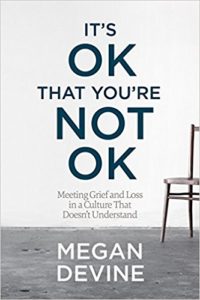
It’s OK That You’re Not OK: Meeting Grief and Loss in a Culture That Doesn’t Understand
Megan Devine
Sounds True, 2017
Paperback: 280 pages
It will happen to all of us and we are not prepared.
Devastating, catastrophic loss looms in the indefinite future or stagnates in the endless present for us and those we love.
Instead of sensitive, wise, practical preparation and responsiveness, we have, for the most part, an accumulation of awkward phrases, often-empty rituals, and the luring temptation of denial and avoidance.
Into this cultural, relational, moral morass boldly steps Megan Devine, bringing an irrepressible voice of deep humanity, kindness and protection. She’s a psychotherapist by training and suffered her own shocking loss. Megan had some good, close-in support, but she mostly suffered through the insensitive, mechanical, cruel reactions of unattuned people. Thus began her decades-long, committed project to turn our cultural neglect around loss and grief.
Her accessible, deeply moving book is rife with examples of people not met in the moments when their worlds collapse—nor in the weeks, months and years following. With courage, determination, and some skillful support, she learns that she cannot get over or through or beyond her loss, but she can carry it for the rest of her life.
Megan’s book is an extraordinary collection of riveting, calamitous stories, advice on how to survive the worst early stages of grief, how to stay compassionately with ourselves as we move through that totally unpredictable, 24/7 nonstop realm, and how we can skillfully support others in their horrifying experiences of grief.
The book normalizes what our culture turns away from and denies around grief. She provides merciful refuge for those who have been told to move on, get over it and come back to the way they were. Megan provides first aid for the immediate impact of crushing loss, and also guidance around its chronic presence in our life ever after.
Reading the book is like jumping into a rushing, fresh, icy mountain stream—invigorating, life-giving, yet easy to avoid. Except we cannot avoid—will not avoid—grief.
Jump in. The life you affect will be yours, and you will become a lifeguard for others.
— James Flaherty
News & Updates
Advanced Training for Coaching Practitioners
Save the date!
October 16-20, 2019
From James:
Next year I will be working with a select group of 20 coaching practitioners—people who are actively engaged coaching individuals and groups.
It will be a five-day, in-person seminar at our headquarters in San Francisco and will include five months of continuous education afterwards, including reading five books together and meeting the authors via videoconference.
I will offer deeper and more comprehensive processes, models and ways of showing up than are possible in our yearlong class.
Purpose of the Course
You will experience more profound, sensitive, generative contact with the coaching process as it unfolds immediately and over time.
Intended Outcomes
- You will have greater competence in including all aspects of your intelligence—somatic, emotional cognitive—as you listen, coach and design.
- You will be much more creative and fluid in the moment of coaching itself.
- You will vastly expand the ways you know yourself and others so that your repertory of questions, practices, and design elements more powerfully shift your clients.
- You’ll be a member of the worldwide developmental community of coach practitioners.
- You will renew your dedication and enthusiasm around coaching and deepen your sense and expression of vocation.
Contact us to learn more.
Six Months of Turning Towards Life
Lizzie Winn and Justin Wise of thirdspace coaching in London are celebrating six months, 30 episodes, and over 650 members of of their Turning Towards Life discussion group. The weekly series consists of a live discussion on Facebook at 9am GMT Sunday mornings (recorded for those who want or need to view it later).
The intention for the series is to invite and inspire us all to respond to what’s called for in life with its many uncertainties. Each week Justin and Lizzie delve into big topics based on inspiring sources, exploring how they can help us connect deeply with others and respond skilfully to what’s happening around and within us. Past episodes include “The Paradox of Change,” “Identity and Integrity,” and “Advice from the Dying to the Living.”
Turning Towards Life is a wonderful weekly mini-retreat guided by two wise, generous and skillful teachers. If you haven’t already, check it out and share it with your community! You can learn more and join the group here.
Graduate News
Letter from the Graduate Department
Dear friends,
In the last issue of Distinctions we inquired about how you share your experience of the PCC with others. We have since begun looking more deeply into the kinds of folks who end up at NVW, what their motivations are, and what possibilities are opened for them in the PCC.
As our biggest source of new students, we’re deeply curious not just how you talk about this work, but how you express it in the world in a way that inspires others (Justin, Lizzie, and Angela’s projects featured in this issue are great examples of this).
We’d love to know how your unique light is serving as a beacon to others. Please send your news and ideas in writing, voice or video recordings, or any other method (get creative!) to [email protected]. This is for our research and not intended for public viewing; however, if your submission is particularly stellar we may ask your permission to share it.
We’re inspired by your courage for stepping deeper into life every day.
With love,
Sahar Azarabadi & Adam Klein
Graduate updates
Angela King (2014) is the host of Innerforce, a weekly radio show on VoiceAmerica’s business channel. Designed for busy professionals, Innerforce offers wisdom and practices to spark inspiration, vitality, and creativity. Each episode is in-depth exploration of a topic (mindfulness, self-care, body awareness, emotional intelligence, etc.) that features a discussion with someone from the NVW community and provides a weekly practice guide for listeners. This is a great resource for us, our colleagues and our clients. Congratulations, Ange! Get listening here.
Congratulations and welcome to our new graduates!
Malalay Arghestani, Redwood City, CA, USA
Fielding Arnold, Durham, NC, USA
Lakshmi Balaji, Folsom, CA, USA
Lucy Basta, San Francisco, CA, USA
Patricia Beatrice Lawrence, Cape Town, SOUTH AFRICA
Sandy Bendorf, Auburn, CA, USA
Juli Choden, Bodega Bay, CA, USA
Lakshmi Dady, Minneapolis, MN, USA
Jane Day, Johannesburg, SOUTH AFRICA
Oscar de Bruyn Kops, Washington, DC, USA
Sarah DeWitt, Washington, DC, USA
Debbie Donaldson, Johannesburg, SOUTH AFRICA
Marilyn Draper, Cleveland, TN, USA
Lorrayne Duweke, Johannesburg, SOUTH AFRICA
Jim Fallon, Hollis, NH, USA
Gillian Figaji, Cape Town, SOUTH AFRICA
Joanna Gislason, Vancouver, BC, CANADA
Mansi Goel, Redwood City, CA, USA
Quan Golomb, Bronx, NY, USA
Erin Guhr, San Carlos, CA, USA
Kathy Hadizadeh, Los Angeles, CA, USA
Patty Harsch, Fort Collins, CO, USA
Lineke Haydock, Johannesburg, SOUTH AFRICA
Beth Hicks, Chicago, IL, USA
Laura Hooper, San Carlos, CA, USA
Monica Hopkins-Maxwell, Washington, DC, USA
Jinevra Howard, Austin, TX, USA
David Huffman, San Francisco, CA, USA
Stephany Jones, Moehlin, SWITZERLAND
Ashok Kanagal, Phoenix, AZ, USA
Jorge Kanahuati, Mexico City, MEXICO
Robin Kersey, West Linn, OR, USA
Nabil Khatib, San Francisco, CA, USA
Yvonne Kilian, Cape Town, , SOUTH AFRICA
Eric Kisshauer, Concord, CA, USA
Ida Klein, Venice, CA, USA
Anna Kolak, Oak Park, IL, USA
Sarah Kooshian, San Francisco, CA, USA
Eric Kumkani, Johannesburg, SOUTH AFRICA
Jing Ma, Beijing, CHINA
Angela MacDonald, Cape Town, SOUTH AFRICA
Heather Mattisson, Chandler, AZ, USA
Ivo Mensch, Berlin, GERMANY
Sharon Moller, Cape Town, SOUTH AFRICA
Eric Nehrlich, Mountain View, CA, USA
Stephanie O’Brien, San Francisco, CA, USA
Cara O’Shell, San Francisco, CA, USA
Annie Obermeyer, San Francisco, CA, USA
Akunna Ethel Onwu, Johannesburg, SOUTH AFRICA
Bruce Michael Oom, Cape Town, SOUTH AFRICA
Hanja Oosthuizen, Cape Town, SOUTH AFRICA
Wylie Peterson, San Francisco, CA, USA
Delia Piemonte, Cape Town, SOUTH AFRICA
Dov Pollack, Oakland, CA, USA
Carlos Puig, Santa Clara, CA, USA
Linda Reid, San Francisco, CA, USA
Omeed Rezaian, San Jose, CA, USA
Helen Robinson, Cape Town, SOUTH AFRICA
Lily Steinbach, Burlingame, CA, USA
Catharina Stokes, Johannesburg, SOUTH AFRICA
Robin Stone, East London, SOUTH AFRICA
Stella Strazdas, Hoboken, NJ, USA
Marinda Tadman, Johannesburg, SOUTH AFRICA
Mark Teitell, Pleasanton, CA, USA
Amanda Thibert, Marblehead, MA, USA
Abby Topolsky, San Francisco, CA, USA
Sandra Weng, San Francisco, CA, USA
Kelly Whitworth, Birmingham, AL, USA
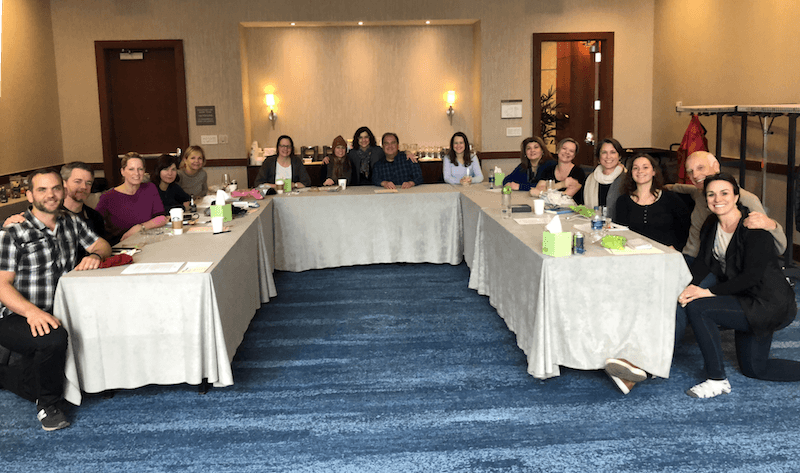
PCC “Y” finished their year in Washington DC in March. Congratulations, friends!