Summer 2021
Beauty in the Breakdown: How Do We Keep What Is Good?
Since the beginning of the coronavirus pandemic I’ve finalized a divorce, survived a painful breakup, and sold my home. As Spring 2021 crept along and plans for the vaccine rollout were shared, I envisioned a return to a busy life as a social butterfly. Instead, between my first and second shot, I met someone and love blossomed.
Featured Article • Beauty in the Breakdown: How Do We Keep What Is Good?
Beauty in the Breakdown: How Do We Keep What Is Good?
by Jessica Phillips
In the waning days of the Great American Quarantine, I’ve been falling in love.
Since the beginning of the coronavirus pandemic I’ve finalized a divorce, survived a painful breakup, and sold my home. As Spring 2021 crept along and plans for the vaccine rollout were shared, I envisioned a return to a busy life as a social butterfly. Instead, between my first and second shot, I met someone and love blossomed.
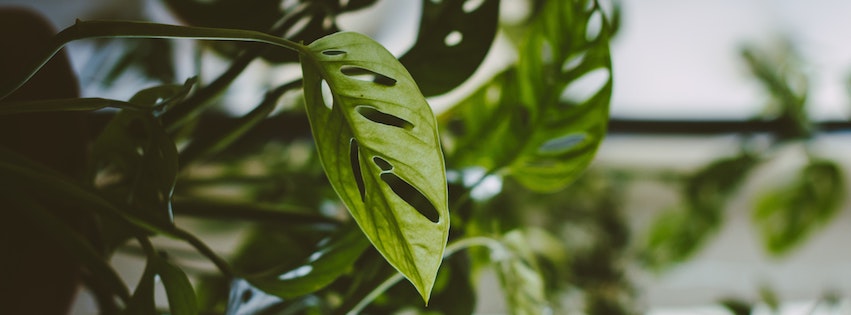
With this new love came a realization that I was showing up in this relationship in a very different way than ever before. Taking a year-plus pause from my usual busy, over-committed life and living at a slower pace brought some real gifts. My capacity around connection and vulnerability grew deeper throughout the year as I met weekly with my pod: an incredible group of five people with whom I shared meals, clear agreements, and lots of love and support . As my social commitments otherwise ground to a halt, my nervous system reorganized around a life dedicated to slower pursuits. The green joy of Pothos, Marantas, and Calatheas filled my apartment as I learned to care for plants for the first time ever.
As my capacity to slow down and take joy in small moments grew, my narrative around staying hyper-involved and busy as a way to generate meaning and purpose lost hold. All together this created a profound change in my ability to be in deep relationality with others, stay present, and make commitments. Out of the breakdown of the pandemic came a breakthrough.
Alchemy
Breakdowns can lead to breakthroughs. This time of great pain and loss also created vast openings and opportunities for people, movements, and systems. Disability justice activists were stunned to watch as jobs or programs they had been told couldn’t be done online or provided virtually were suddenly available as the world went online. Mutual Aid Networks sprung up as people realized their neighbors were barely hanging on and needed help. Cities that had treated homelessness as a crime finally realized it is an issue of public health, and allocated resources to house people in hotels, potentially marking a significant shift in the way cities approach homelessness in the future. The movement for racial justice and against police brutality experienced a massive wave of support after a white police officer murdered George Floyd, with some speculating that with so many working from home, people had more energy and attention available to fight for racial justice.
Increased accessibility. Neighbors taking care of neighbors. Housing for the homeless. A worldwide wave of people demanding an end to police brutality. Amidst the pain, fear, loss, and death due to Covid-19, we’ve found ways to progress. Like medieval alchemists of legend, we took base metals and transmuted them into gold.
How do we keep what is good?
This is the question I hold for myself and for the world. When we move out of the breakdown, how do we keep the gifts of the breakthrough? In my personal story, I want to continue embodying this way of being that can fall in love in a full-hearted way. I also, like many of my friends, family and colleagues, deeply long for a world that continues to have compassion, resources, and attention for the vast social, political, and racial breakdowns that have existed for decades but have only gained visibility through their intersection with the pandemic. How can we do this?
Purposeful life design
Integral Coaches know that how we change and how we stay the same is the same process. We pay attention to certain things, which generates insight and brings about our understanding of the world. This understanding leads us to act in a certain way, which brings more of the same into our awareness. In the Professional Coaching Course, we learn that as coaches we can generate change for our clients by having them engage in new actions (leading to new insights) and by giving them new things to pay attention to. We might ask questions like: What kind of person do I want to be? How could I bring that person about? By choosing those things intentionally instead of just letting them happen, we are engaging in purposeful life design.
We can also do this on a broader level to build culture and shape society. In his book My Grandmother’s Hands, Resmaa Menakem writes:
“Culture is how our bodies retain and reenact history…Change culture and you change lives. You also change the course of history, Many well meaning social activists overlook this essential fact. They focus relentlessly on strategy, but strategy means nothing to our bodies and our lizard brain. When strategy competes with culture, culture wins – every time…We humans want to belong…But we can never belong to a strategy. We can never belong to a movement, either, though we can be a part of it. We can only belong to a culture.”
Menakem also writes about how unhealed trauma can start to look like culture when it transmits and compounds through multiple families and generations—but it is not culture, “it’s a traumatic retention that has lost its context over time.”
Healing trauma at the level of culture
Those vast social, political, and racial breakdowns that the pandemic helped reveal? Many people in the United States view those as evidence of an irredeemable, corrupt culture. Perhaps. But what happens if we consider the possibility that what we have mistaken for culture is actually an unhealed traumatic retention? Notice what changes for you in this shift. Can you begin to imagine a culture that could hold and ease this traumatic retention? Imagine what qualities and values this culture would embody and celebrate. Envision what things it would pay attention to, and how members of that culture would be treated and cared for.
How would it feel to belong to this culture? What is the smallest step you can take to live this culture into being?
Perhaps you, like me, have made some alchemical magic in the past year and wish to continue to cultivate it. This is an invitation to think deeply on how to bring attention and intention to the self and culture that you hope to see flourish. I hope the practices below can be supportive in this effort, especially as the Delta variant brings uncertainty and confusion. When I began writing this article, there was hope that we were emerging from quarantine in the US. As the article arrives in your inbox, rising cases suggest widespread restrictions may return.
For myself, I commit to saying “no” to patterns that would draw me back into my old, busy way of being and “yes” to relationships and commitments that enable spaciousness and depth. I say “yes” to building a culture of curiosity and “no” to a culture of jadedness. Whether my love affair proves to be a showy annual or a long-lasting perennial, I commit myself to caring for this new version of myself just as I did for my first plants: with lots of curiosity, tenderness, patience, and my whole heart.
Love,
p.s. Here’s a song to help you integrate these ideas.
Practice • Building Culture, Beginning Small
Focus: Building Culture, Beginning Small
This practice has two parts; a one-time journal exercise and then an ongoing self-reflection exercise.
In her book Emergent Strategy: Shaping Change, Changing Worlds (review below), adrienne maree brown names the following as a Principle of Emergent Strategy: “Small is good, small is all. (The large is a reflection of the small).”
Later, she writes:
“How we are at the small scale is how we are at the large scale. The patterns of the universe repeat at scale. There is a structural echo that suggests two things; one, that there are shapes and patterns fundamental to our universe, and two, that what we practice at a small scale can reverberate to the largest scale.”
Journaling Exercise
In this quarter’s article you were introduced to Resmaa Menakem’s concept around how unhealed trauma can be mistaken for culture. Given this premise, journal on the questions below.
- What would a culture capable of holding space and easing this unhealed traumatic retention look like?
- What qualities and values would this culture embody and celebrate? Who or what would this culture pay attention to? What rites of passage or holidays would it celebrate?
- What would belonging to this culture feel like? How would members of this culture be treated and cared for?
- Imagine you are a member of this culture. What would feel possible for you to express or contribute to this culture? Please finish these sentences:
- In this culture I feel free to express my ______.
- In this culture I would feel able to contribute by _______. In the practice below these will be identified as “my expression” and “my contribution”.
Self-Reflection
The intention of this practice is to cultivate cultural change at the small scale. By paying attention to new things, you will generate insight and bring about your understanding of the world. This will lead you to act in certain ways, which will bring about more of the same.
As you create culture for yourself, remember that how we are at the small scale is how we are at the large scale. How will your change reverberate to the largest scale?
Please take this up for two weeks or more as suits you.
Please stop twice per day to ask yourself the following questions. Write down your responses and make notes of your answers so you can notice patterns.
Over this last period of time:
- In what ways did I share my expression?
- In what ways did I offer my contribution?
- What happened? What possibilities opened, no matter how small?
- What will I take up, put down or adjust from what I learned in this exercise?
Poetry & Reading
Poems of the Quarter
Spoiler
Hala Alyan
Can you diagnose fear? The red tree blooming from uterus
to throat. It’s one long nerve, the doctor says. There’s a reason
breathing helps, the muscles slackening like a dead marriage.
Mine are simple things. Food poisoning in Paris. Hospital lobbies.
My husband laughing in another room. (The door closed.)
For days, I cradle my breast and worry the cyst like a bead.
There’s nothing to pray away. The tree loves her cutter.
The nightmares have stopped, I tell the doctor. I know why.
They stopped because I baptized them. This is how my mother
and I speak of dying—the thing you turn away by letting in.
I’m tired of April. It’s killed our matriarchs and, in the back yard,
I’ve planted an olive sapling in the wrong soil. There is a droopiness
to the branches that reminds me of my friend, the one who calls
to ask what’s the point, or the patients who come to me, swarmed
with misery and astonishment, their hearts like newborns after
the first needle. What now, they all want to know. What now.
I imagine it like a beach. There is a magnificent sand castle
that has taken years to build. A row of pink seashells for gables,
rooms of pebble and driftwood. This is your life. Then comes the affair,
nagging bloodwork, a freeway pileup. The tide moves in.
The water eats your work like a drove of wild birds. There is debris.
A tatter of sea grass and blood from where you scratched your own arm
trying to fight the current. It might not happen for a long time,
but one day you run your fingers through the sand again, scoop a fistful out,
and pat it into a new floor. You can believe in anything, so why not believe
this will last? The seashell rafter like eyes in the gloaming.
I’m here to tell you the tide will never stop coming in.
I’m here to tell you whatever you build will be ruined, so make it beautiful.
Becoming Human
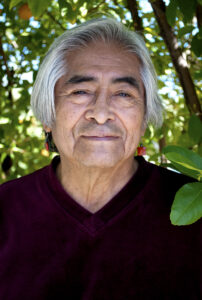
Simon J. Ortiz
We are given permission
by the responsibility we accept
and carry out. Nothing more,
nothing less.
People are not born.
They are made when they become
human beings within ritual,
tradition, purpose, responsibility.
Therefore, as humans, this we do:
Sun Father begins red
in the east.
Stand and be humble.
Red through trees,
moments changing each instant
into the next change,
each change tied to the next.
To be human is to have
a sense of being within self.
Sun. Red. Trees.
Our hearts’ eyes seeing
inward and outward, accepting:
Stand and be humble.
The more names you have the more of a person you become. That’s what I’ve heard. I was telling Tom yesterday afternoon. Values, education, social change, cultural corruption, what is and what isn’t. I have to dispute him at moments. I tell him, The knowledge we derive from the education we get is our own. Knowledge is determined by our cultural, spiritual, linguistic, political environment. The knowledge from the community and context here cannot be anything but the people’s own. This is not Chicago, St. Louis, Dallas, or Rapid City. This is Rosebud, the Lakota homeland.
Our names are both Indian and American. We have so many names now we don’t know them all. In a sense, we have become more of a people than ever before.
Book of the Quarter
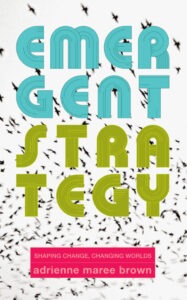
Emergent Strategy: Shaping Change, Changing Worlds
adrienne maree brown
AK Press, 2017
Paperback: 280 pages
Don’t pick this book up expecting a clearly defined strategy for how to respond to the most pressing issues our world is facing. Instead, you will be welcomed into author adrienne maree brown’s love affair with the force of emergence. Emergence is a concept she defines several ways; as “another way of speaking about the connective tissue of all that exists”, or “the way small actions and connections create complex systems.” Also, “our inheritance as part of the universe.”
Brown brings together the patterns she has noticed under the mantle of Emergent Strategy, which one reviewer defined as “a pattern language and nonlinear playbook for waging love in dark, uncertain times.”
Drawing on the work of science fiction giant Octavia Butler, organizational expert Margaret Wheatley, author and activist Grace Lee Boggs, biomimicry, and her own decades as a movement organizer and leader, Brown offers principles for organizations, movements and humans “to practice being in right relationships to our home and each other, to practice complexity and grow a compelling future together.” A deeply moving, practical, poetic, and resourceful guide.
—Jessica Phililps
News & Updates
The Medicine You Need, The Medicine You Give
A brand-new program with Russ Hudson and James Flaherty
In this new virtual workshop, Russ and James will show participants how to contact and receive the intelligent, warm and unlimited help available to us at all times. They will draw on their decades of experience, their own far-reaching studies, and their sensitivity to what arises in the moment. Russ and James will bring methods, practices, self-awareness activities, ancient wisdom and new scientific discoveries so participants can directly contact their ability to continuously receive what they need, and then turn their whole heart and intention to assisting others.
The Enneagram and Integral Coaching
12 weeks beginning September 7
4-7:15pm Pacific / 7-10:15 SGT (one day later). US$1,875
Still virtual… for now!
As this issue of Distinctions has invited us to explore, we are still in a time of not-knowing, of transition, of emergence. As PCC cohorts come to know and love each other in the virtual space, a craving naturally develops to be with one another in person, to hug, to share meals and dance together, to find what kind of shoes their classmates wear …
Of course the NVW leadership and faculty are craving those things too, and understand the drive so many of us have to be in contact with one another. And. Life appears to be asking us, still, to be patient. As of the time of this publication, the Delta variant of COVID-19 has become enough of a concern for many cities and institutions to re-instate mask mandates, for many to reconsider summer plans, and for folks to take a few steps back from one another once again.
And so, hopefully for just a little longer, we lean back into the virtual space that we are fortunate to have. Professional Coaching Course cohorts have begun and concluded on Zoom, as have dozens of Foundations of Coaching workshops, free events, graduate seminars and more. Below are some recent comments from participants to remind us all that, although it is far from ideal in many ways, we are still able to learn, develop, and build community over the airwaves and across the miles. Hang in there!
“The session was great, exceeded my expectations, especially given the topic and virtual nature of the course. The facilitator was great and really set a wonderful tone for the three days. I felt part of a bigger community and connected throughout and that was due to the leader’s warm and effective approach.” – Foundations of Coaching, June 2021
“This was an incredibly healing, connecting, and invaluable session for me. I loved the focus on inquiry, on experience and exploration, and the collective support of everyone.” – Graduate Wellspring, Spring 2021
“It was beyond my expectations. I didn’t realize Integral Coaching would go to such a deep place. It was a really nice surprise. In addition to learning the foundation of the method, I was also able to gain real world possibilities for my own challenges in the workplace as well as ways to help develop my employees. You gave plenty of breaks (thank you!), the days weren’t too long, the content was easily digested, and the teacher and host were top notch.” – Foundations of Coaching, July 2021
“I wish the session had been longer, with more exposure to other students. The texture of the field created during this short program was so full of love, curiosity and courage, I just wanted more more more.” – Graduate Learning Lab, July 2021
Graduate News
Dear graduates,

As much as we all hoped to be in a place of greater certainty by now, we must continue surrendering to what is beyond our control, expanding our curiosity and, most importantly, supporting one another. All of this for the sake of—as Jes reminds us in her lead article—cultivating what we know to be good and true in our work, our communities, our world.
It has been truly moving to watch our global community remain woven together—and even deepen in relationship—throughout the last year. To help foster this, we’ve striven to make as many offerings available across as many time zones as possible. This fall, the Enneagram and Integral Coaching sessions will take place at a time designed to accommodate our robust Asia Pacific community.
Facilitating Coaching Circles, our newest offering for grads, features a self-paced e-course that you can do from anywhere, and one of the scheduled workshops is designed to work for Asia as well. We’re particularly excited about this course, which is a collaboration with faculty emeritus Charles Brassard, who brings his years of expertise into designing and delivering this program. We hope that it adds a dimension to your work, and widens your possibilities for connection and career development.
Many courses that we are putting out and developing are in response to what you have so generously shared about hopes for your own development and work with clients. Please keep bringing your voice. The next Graduate Community Gathering —the last one for 2021—is happening on October 13. We hope to see you there.
Love,


Sahar and Adam
Congratulations and welcome to our newest graduates!
Sam Adams, Gibsons, BC, Canada
Zai Bakhshi, Haryana, India
Kristina Barnes, Berkeley, CA, USA
Thea Bauer, Vancouver, BC, Canada
Daniel Benny, San Francisco, CA, USA
Alex Boothe, Washington, DC, USA
Caren Brown, Sarcedo, Italy
Juliana Bulger, Healdsburg, CA, USA
Catherine Byers, San Carlos, CA, USA
Rani Chansrichawla, Bangkok, Thailand
Em Clark, Boise, ID, USA
Lori Costabile, Alameda, CA, USA
Maria Damen, Amsterdam, Netherlands
Debbie Danon, London, UK
Christopher Day, Berlin, Germany
Danielle Duong, Anaheim, CA, USA
Caro Evans, Edinburgh, UK
Lucie-Anne Fabien, Saint-Lambert, QC, Canada
Stephanie Foster, New York, NY, USA
Raluca Graebner, London, UK
Brit Horne, Charlottesville, VA, USA
April Jackson, Upper St. Clair, PA, USA
Alex Jaques, Santiago, Chile
Betty Lapeyre, Berlin, Germany
Paula López, Ft. Lauderdale, FL, USA
Nicole Lopez-Conti, Irvine, CA, USA
David McCahon, Ipswich, UK
Bryn McCoy, Wilmette, IL, USA
Margaret McGrath, Omaha, NE, USA
Matt McNeill, Epsom, UK
Tim Means, Chandler, AZ, USA
Dianna Milewski, Prescott Valley, AZ, USA
Jocelyn Miller, Jersey City, NJ, USA
Jose-Luiz Moura Neto, London, UK
Michael Paone, Brooklyn, NY, USA
Renee Patton, Santa Cruz, CA, USA
Gio Raminella, Milan, Italy
Beth Rookwood, Morpeth, UK
Shuchika Sahay, Mumbai, India
Judith Sanders, Webster, TX, USA
Britt Sandkulla-Sinclair, Vallejo, CA, USA
Federica Santucci, Rome, Italy
Hilary Spreiter, Los Altos, CA, USA
Omkar Udas, Singapore
Kate Van Akin, London, UK
Moritz von Campenhausen, Hamburg, Germany
James Webb, Tonbridge, UK
Prisca Weems, Gard, France
Cindy Wilde, Morgan Hill, CA, USA