Autumn 2021
What are we talking about when we talk about being present?
What does it mean to be present? In my work with clients I often hear phrases like, “I just want to be more present,” or, “I want to be less distracted and more in the moment.” This is an example of an enlivening question—a way of inquiry which, in asking and engaging with the answers that arise, contributes to shifting our understanding and experience. The process itself changes us.
Featured Article • What are we talking about when we talk about being present?
What are we talking about when we talk about being present?
by Adam Klein
“People say that what we’re all seeking is a meaning for life. I don’t think that’s what we’re really seeking. I think that what we’re seeking is an experience of being alive, so that our life experiences on the purely physical plane will have resonances with our own innermost being and reality, so that we actually feel the rapture of being alive.” —Joseph Campbell, The Power of Myth
Questions like this have innumerable answers, and I invite you to join in as we explore a few—which hopefully elicit more questions, more for us to discover.
In Integral Coaching one way we support our clients is through opening more ways for them to be in contact with their experience. This can take many forms, and often it looks like embracing or turning toward what feelings and emotions are there for them at any given moment. While seemingly a simple invitation, it can lead to profound transformation as our emotional world is quite dynamic, fluid, multi-layered and multi-faceted. The experience of this happens when we go below the surface, or pull on a thread and see where it leads.

For one client, connecting with feelings opened a world they had long forgotten existed. They came to coaching in a fine place—life seemingly going well with their family, success in their work—and there was an inkling of something amiss: a subtle sense they had of not being connected to life in some foundational way.
As we began our conversations with each other, I noticed their vocabulary in response to the question, “How are you feeling?” was somewhat limited, often repeating the same feeling words (e.g., “good,” “fine,” “content,” “a little frustrated”) week in and week out. When we turned into exploring more fully their emotional experience, a (re)connection began happening for them. They could see places in their relationships where they were not noticing their own or the other’s emotional state, and how that was influencing their conversations.
As they started paying more and more attention to how they were feeling in response to being with the other person, the way they acted in the conversation changed, and the conversations themselves began taking fresh twists and turns. The relationships shifted as a result. This showed up in multiple relationships and opened new ways for them to both ask questions of the other and express how they felt. They had reconnected with a dormant part of themselves through development of the emotional stream, which supported them in feeling alive and connected to the other.
Another thread in the tapestry of our experience is what is happening in our body. In part, this means including in our conscious awareness the sensations running through us. I’m reminded of an instance with a client where this initially unnerving discovery led to a profound sense of life direction.
This pathway began with them exploring what was next for them in their career. They were in a successful place and felt compelled to do something more purposeful with their work. They didn’t know exactly what it was, and attempts they made at it left them feeling exhausted and inadequate.
As we began to include how they experienced what was going on for them in their body—which took the form of me asking them to say what sensations they noticed—they didn’t know exactly. The question left them feeling blank. We started there. What was the blankness like? As they turned toward and lingered with the blankness, what they came to sense was a vast openness within them. This led to a feeling of being unpleasantly alone, with an impulse to move away. With support, the client was able to linger longer and longer with that sense of inner openness and become more comfortable including it, versus going with the reaction to move into action. As they did they began to experience more groundedness in themselves, which freed them from feeling the need to be perceived in a particular way by others. They saw they had been pursuing some of the more purpose-driven work attempts as a way to appear as though they were doing something that would be considered by others as more significant. As they connected more deeply with this anchored part of their somatic experience, they began taking on projects that previously felt too “out there.”
In each of these cases and many more, my sense of what happens when we are with more of our self —how we are feeling, what we are sensing—is that we are not only including more of of our experience, we are also connected to a deeper pattern of intelligence and invitation: one that is both our life and life itself living through us. In all this we can begin to experience life as both us and bigger than us.
Love,

Practice • Being Present to Joy
Being Present to Joy
Engage in one [non] activity or conversation each day, that connects you, to whatever degree, to joy.
At the end of the day, journal on the following questions:
- What do you notice emotionally?
- …in your physical sensations?
- …in the quality of your thinking?
After a couple months, reflect and write a bit about what you are learning about who you are as a result of this practice.
Poetry & Reading
Poems of the Quarter
Poems by Rupi Kaur
from milk & honey
my favorite thing about you is your smell
you smell like
earth
herbs
gardens
a little more
human than the rest of us
loneliness is a sign you are in desperate need of yourself
accept that you deserve more
than painful love
life is moving
the healthiest thing
for your heart is
to move with it

Book of the Quarter
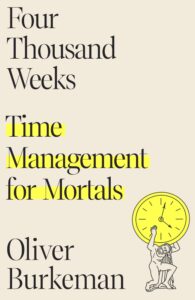
Four Thousand Weeks: Time Management for Mortals
Oliver Burkeman, Farrar, Straus and Giroux, 2021, Hardcover: 288 pages
In an engaging, poignant, and witty way, Oliver Burkman invites the reader into a timeless question: “How do we best use our time?” He leans into the question through myriad angles, and I found his way of meeting this question with the zeitgeist of our current ethos quite compelling. It reminds me of what brings power and timelessness to the artist’s expression: engaging deeply from the place in which we find ourselves. This book is both practical and enlivening, as it supports us in turning into our finitude and exploring what it means to be a being-in-time (yes, he brings in the work of Martin Heidegger).
—Adam Klein
News & Updates
Faculty Spotlight: Fabian Di Felice
Last month the NVW faculty body recognized Fabian di Felice, our longtime partner in Buenos Aires, Argentina, as a fully certified Professional Coaching Course leader. This rite of passage acknowledges the years of humble dedication, unconditional love, and vibrant joy Fabian has brought to the PCCs on which he has served as faculty.
Among his many achievements, Fabian developed and led the first-ever Spanish language Foundations of Coaching and Coaching for Development courses in Buenos Aires and virtually.
We recently had a conversation with Fabian about his experience as a student and teacher of Integral Coaching. Enjoy getting to know him, and join us in congratulating him!
What led you to this work?
I was in the corporate world and living in a narrative of being tough, suppressing all types of feelings, and developing cognitively by doing courses.
I was forced to be coached for a year, and three months into it my life changed. I realized that I was rejecting anything to do with human development. I was treating my wife and kids like senior employees.
The most painful realization was that although I was the youngest leader in a big company, I was not actually leading anyone. I was making people be afraid, thinking they had to learn to obey. Facing that truth was one of the big things that coaching helped me to see.
And the other one is that I realized that I have a body. I was moving from one country to another, flying a lot and getting sick every two weeks. I didn’t realize that I was taking maybe seven, eight type of antibiotics per year. Coaching helped me to understand that I have a body and that body is the other source of intelligence.
With those two big changes, I said, wow, this coaching thing is powerful. Let’s investigate.
What do you remember about being a student in the PCC?
I took Foundations and Coaching for Development in South Africa, and then started practicing coaching in the corporate environment for a year in South Africa and then in Hong Kong. In 2006 I did the PCC in London. It was a very international PCC.
Everything I experienced in the PCC was so new and so different from my corporate world tradition: engineering, strategy, profit and loss, all those things. It went at a different speed. Talking about feelings, talking about having a body. So it was very interesting for me, but at the same I was trying to apply it all to my corporate tradition—“so how this will help me be a better leader in the corporate world?” I started out very different from how I left.
Do you remember what shifted?
Yeah. I saw a few things in the mirror. I saw how arrogant I was—that’s one thing. Another is I remember seeing my essence and remembering the moment I left it, when I was starting to build my career. I was so sensitive. I had such a big heart. I was slow in my ways. Getting on the corporate ladder—which I did very successfully at the time—made me believe I was the corporate character [with all the behaviors that made me successful]. And during the PCC year with one of the big shifts was, “Oh, man. Do you remember that you were sensitive, that your heart was leading your way? You remember that?” And so it was a coming back home.
And interestingly, it’s not like, “bye bye to the corporate leader and let’s become a monk.” It’s the opposite—I became more sensitive, powerful, impactful leader. And that journey inspired me to help other people that might be in that old narrative I had been in. No need to breed cows on a mountainside. When you observe this new way of being, you can still keep yourself in the current landscape, but with different eyes.
When and how did you know that you wanted to be a teacher and a leader in this work?
During PCC the, both my old and new ways of being pointed to my wanting to be a teacher. The old one was saying things like, “ah, they make things so complex here in PCC. I don’t understand fully what they’re saying. I can do it better. I can do a PowerPoint that summarize everything here, more wisely.” I wanted to take what I was learning and take it to others, but in a very corporate way.
At the end of the year I wrote in my essay that in 10 years I wanted to teach Integral Coaching for the first time in Spanish in Latin America. That was my dream. And then magically in 11 years I was doing my first Foundations and Coaching for Development classes in Argentina, in Spanish. In the middle I lived in four countries, so a lot of life happened. It was not a straight shot. But I think that’s good evidence of my wanting to be a teacher.
Since starting to teach, what have you learned from the students?
I learned what we teach around compassion: “They are another me and I I’m another them.” I’ve learned this practically. I can see parts of me in every student, and I can see that they have a little bit of me. It feels like we are always two mirrors, one reflecting the other. So that is what most impactful thing that I learned.
The second thing I learned is how much power can be unleashed if we can keep embracing our imperfections. We can hide our feelings when we feel vulnerable, and I see students realizing that that is the opposite—that our vulnerability is probably the biggest strength. They can build a new type of leadership or a new career based on that vulnerability. So, it’s beautiful. And I learn so much when I see students getting in touch with their shadow side, and how many transformational things happen in their life.
What do you feel most proud of in terms of bringing this work to the world as a leader?
I feel proud of taking weight off. It feels like sometimes I am more of a nutritionist than a coach because I see people losing weight off their shoulders by realizing they don’t need to be in a certain way, or need to be perfect.
Having been in this work for so long, how are you seeing it evolve?
There are two aspects. One is the integral work. I think that naturally humans will become more integral. And then we will realize that that knowledge and cognitive intelligence is very important, but it’s more important to balance that with the spiritual and somatic dimensions.
I don’t see us being called coaches in 20 years. The coaching spirit was there since humans were on this earth. It’s about being with someone side by side, to help them achieve something or to walk a path. So the spirit of coaching will be there, but probably very unlikely that it will stay in its current shape. I don’t know what shape it will take, and that’s OK.
From what you were saying about your experience in the PCC 15 years ago, it seems there hasn’t been much about the heart of the work that has changed.
Yes, the heart of coaching is the same, but humans that apply coaching are transforming. So that is beautiful indeed. Instead of transforming the stuff that is coaching, we look at how it can be used. How is it being taught? How is being applied? And he’s very different from where Integral Coaching started 30 years ago. We are talking about the same things, almost even the same concepts, but in such a different way. And that includes the evolution of humanity. By no means am I saying that PCC cannot evolve, of course it will.
What are you most looking forward to now as a PCC leader?
I’m looking forward to a few things. One is to start being more sensitive and detecting more uniqueness in each person in the cohort, versus the roles of leader, faculty and students. There is no such thing. There is me, there each faculty member with their own needs and motivations and styles. And we don’t have students, we have 20 different beings. So the first thing is how can I start detecting what each person needs?
The second thing that I’m looking forward to is how can I serve those unique needs? After years of working in organizations that were viewed like a pyramid where the leader is on top, I want to invert the pyramid and be down there in service of the other. To ask, “what it is that you need for you to become your best version of yourself, and how can I support that?”
The third thing is one I wish I looked at when I was in the corporate world: how important and difficult it is to become a follower. We all talk about leadership, be the leader, become a leader, a leader, leader, leader. Everyone is a leader. If everyone is a leader, then there are no followers, so there’s no concept of leadership, right? So being a leader for me will have moments of me being a follower of a student or another faculty member. How can I be a smart follower?
And how I can do all things I mentioned without losing the capacity of feeling joy?
Anything else you want to say?
There’s something in me that always pops up, which is the international community of our work. The nature of coaching and of what we are teaching is about becoming citizens of the world. And this is something in particular that I embody having lived around the world for 14 years. Coaching teaches us how to listen to someone, how to be mindful and respectful of different traditions, how to have different ways of showing and transmitting wisdom. It’s like coaching opens up certain channels and sensitivities. We are preparing to move around the world and see humans, no matter who they are.
Meet Fabian on a Free Call on March 17, 2022.
Enneagram Global Summit
Join James Flaherty (and a bunch of other great speakers!) at this year’s free event.
NVW founder James Flaherty will be a presenter at this year’s Shift Network event, taking place December 6-10. He’ll be in conversation with host Jessica Dibb and a panel of coaches on the topic, “The Enneagram as a Self-Empowering Coaching Master and Guide.” Learn more and register for the event here.
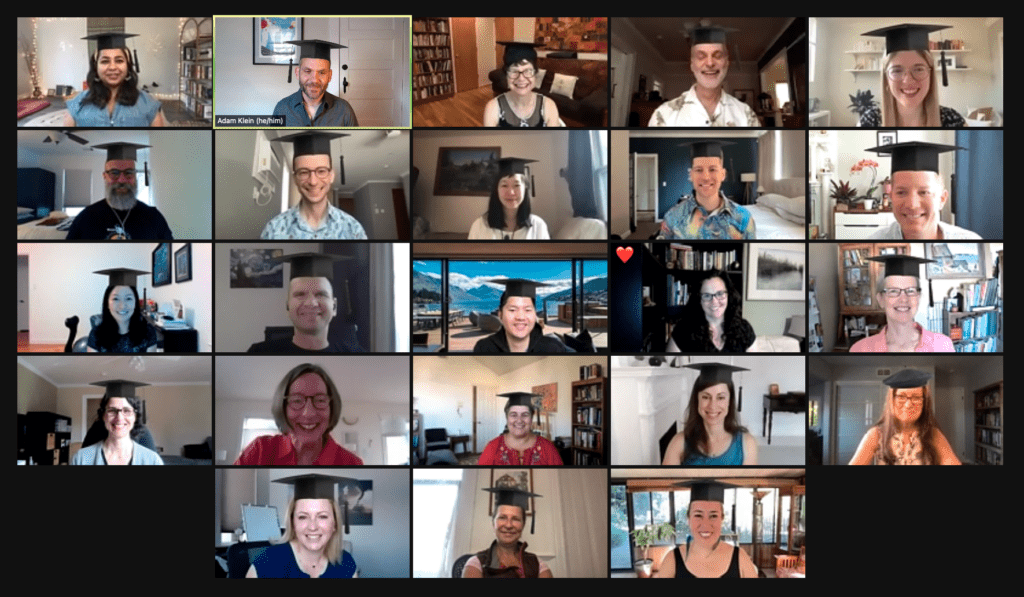
Students from all walks convene (virtually!) in South Africa
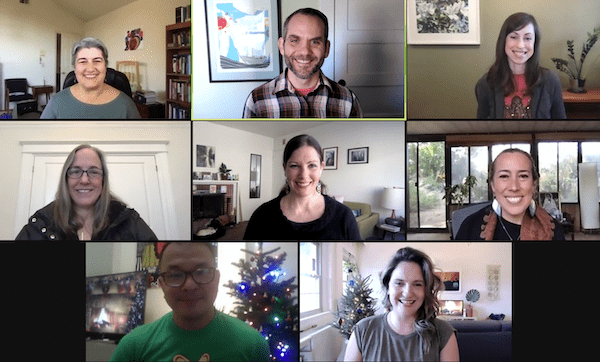
The Centre for Coaching, our wonderful partners based in Cape Town, have been hosting virtual Coaching for Development and Professional Coaching Course cohorts that have attracted folks from all over the world, representing a vast array of nationalities, ages, and backgrounds.
Students are from Europe, Asia, the US and South Africa. Ages range from 24-65 years old. They occupy positions in Human Resource Management, Sales & Marketing, Consultancy, Talent Acquisition, Project Management, and Entrepreneurs, coming from sectors including nonprofit, FMCG, petroleum, banking, and beyond.
To the right are of students in one of this year’s Coaching For Development courses. See the calendar below for Centre for Coaching’s 2022 offerings.
Graduate News
Dear graduates,

Since you learned there is such a thing as vocation, you’ve probably realized that it is not a fixed point. We do not have a vocation, we are our vocation. Calling is an authentic response to a moment in time—a way of being that has us respond to life and those we serve in ways that point to their very aliveness.
In these last couple of years of great upheaval, you might be finding that what you thought you were up to in life has shifted, and you need to find a new way to meet it.
In the spirit of supporting this exploration, we are particularly looking forward to two graduate programs beginning in the new year: The 2022 Graduate Wellspring and The Business of Integral Coaching.
The overarching intention of the Wellpsring is always for Integral Coaches to come back to the lap of this community and be held and renewed. This year, our conversations and practices will focus on meeting your calling in the moment, and staying connected to it in an ever-evolving world.
And the Business of Integral Coaching is a seven-month program that begins with mining your story, finding the through-line of what brought you to this moment, and connecting it with how you can most authentically serve. From there, you’ll be guided in how to share this with a world effectively and build a sustainable practice around it.
We’re also hoping that someone reading this is the perfect fit to join our staff to support our graduate programs and the staff more broadly. See below for the whole story.
We hope that these darker, reflective days are nourishing and restful for you, and look forward to connecting with you again in 2022.
Love,

Sahar and Adam
Grad Happenings
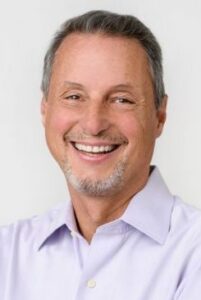
Gaëtan Pellerin (grad. 2012) has written and published Mindful NEGOtiation, a book based on a methodology he developed to help negotiators becoming more mindful and curious about what is going on inside of their day-to-day reality and understand their ego from an observer’s point of view. While the book is written with negotiation situations in mind, the methodology can be applied to any situation in life where our ego is triggered or our client’s ego are triggered.
Curious to know more? You are in luck—Gaëtan is one of the authors featured in next quarter’s Book Study Group! Congratulations on this wonderful achievement, Gaëtan.
We’re hiring!
We are two years into the new season of New Ventures West and are feeling a swirl of energy and possibilities. As the organization continues to unfold, we see the need for support in our graduate programs and program administration.
The person in this role will be working alongside Adam, Sahar, Joy, and Mary to support our program offerings to both graduates and those newer to the community.
This is a part-time position, which we think will be around ten hours a week to begin with. We see this as an evolving role with the possibility for growth. The person should be a PCC graduate.
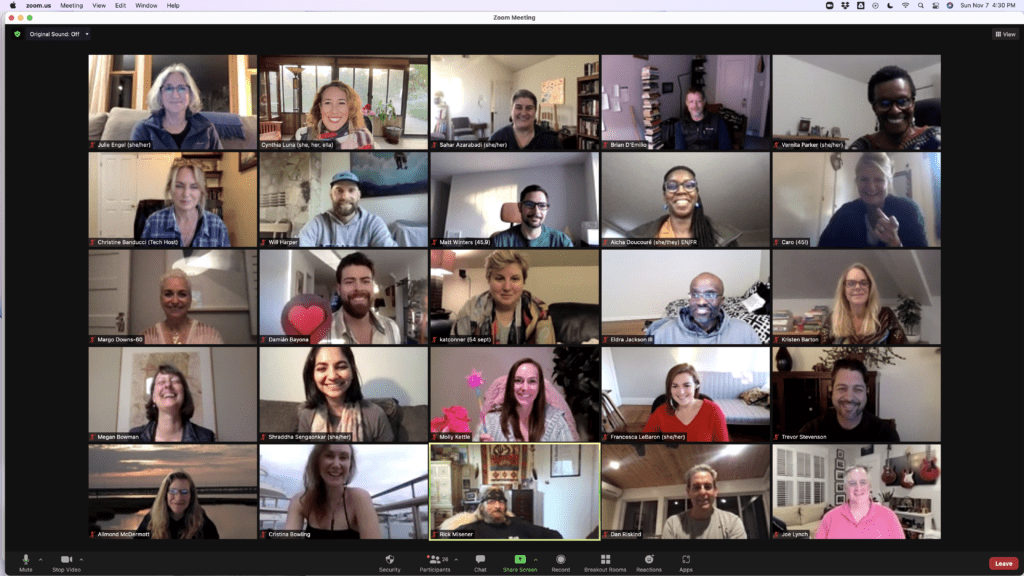
Congratulations and welcome to our newest graduates!
Kathryn Andersen, Charlotte, NC, USA
Kristen Barton, Los Altos, CA, USA
Emmanuelle Bedard, Los Angeles, CA, USA
Raashi Bhatia, Newark, CA, USA
Damián Bayona, Sausalito, CA, USA
Cristina Bowling, North Bondi, NSW, Australia
Megan Bowman, Seattle, WA, USA
Jo Catalano, Amsterdam, Netherlands
Dave Cesana, Portland, OR, USA
Kevin Clark, San Francisco, CA, USA
Kat Conner, Midlothian, VA, USA
Kate Damad, Antwerp, Belgium
Aicha Doucoure, Oakland, CA, USA
Margo Downs, San Francisco, CA, USA
Jessica Gigot, Bow, WA, USA
Connie Green, San Carlos, CA, USA
Kathy Grubert, Sylmar, CA, USA
Will Harper, Mill Valley, CA, USA
Sarah Jane Harte, Kildare, Ireland
Matthew Head, Hurstpierpoint, UK
Eldra Jackson III, Pioneer, CA, USA
Molly Kettle, Englewood, CO, USA
Laura Janner-Klausner, London, UK
Brad Kadet, Tokyo, Japan
Joshua Kaufman, Oakland, CA, USA
Hilary Knight, Arundel, UK
Pearl Lai, Westminster, CO, USA
Francesca LeBaron, Oakland, CA, USA
Caro Lee, Kensington, CA, USA
Bryan Lofton, Austin, TX, USA
Joe Lynch, Arlington, VA, USA
Heidger Marx, Berlin, Germany
Allmond McDermott, Ocean Pines, MD, USA
Marta Pichardo Medina, Oxford, UK
Rick Misener, Sacramento, CA, USA
Dmitry Milashchuk, Borex, Switzerland
Catherine Mullens, Cape Town, South Africa
Camila Pestana, Sao Paulo, Brazil
Mary Peterson, Portland, OR, USA
Gita Rader, Alamo, CA, USA
Dan Riskind, Palatine, IL, USA
Kay Rolandi, Frimley, UK
Jo Sandford-Smith, London, UK
Bryta Schulz, San Francisco, CA, USA
Shraddha Sengaonkar, Sunnyvale, CA, USA
Adam Slawson, London, UK
Trevor Stevenson, Mill Valley, CA, USA
Pilar Viguera, Tarragona, Spain
Mordy Walfish, Brooklyn, NY, USA
Tzipi Weiss, Jericho, NY, USA
Julie Wilmes, Castle Rock, CO, USA
Matt Winters, Oakland, CA, USA
Matt Wong, San Francisco, CA, USA
Louisa Wong, Burlingame, CA, USA