Spring 2022
What can coaches learn from artists?
“An artist is an artist long before they create their first work.” – Clarissa Pinkola Estés
Featured Article • What can coaches learn from artists?
What can coaches learn from artists?
by Kerry Radcliffe
Museums are open again! I just visited the Alice Neel: People Come First exhibit at the de Young Museum in San Francisco.
Neel’s portraits are full of emotional intensity and a psychological acuity that compels us to look deeper and longer, but what caught me by the throat was how she did this. As I listened to the audio guide and then later read in the biography, Alice Neel: The Art of Not Sitting Pretty by Phoebe Hogan, what I discovered sounded enthrallingly familiar: Neel allowed herself to be impressed upon by the people she painted.

Inviting essence forth
When Neel invited people to sit, instead of assuming the stance of the artist as genius/expert, Neel took a different gaze, one of curiosity, openness, and warmth. She wasn’t holding the distant view from on high, over there; she was right here, close-in, next to them. Quite often, close-in meant her kitchen, or the front stoop, or someone’s sagging couch (there is a lot of delightful sagging in her oeuvre – furniture, bellies, breasts, drapes and babies).
Neel reportedly refused to ask people to pose; rather, she invited them in, allowing them to find their space, get comfortable, be in their own skin. All the while, Neel observed them, talking with an intensity, but mostly listening at a frequency that allowed her to feel deep into the essence of the person in front of her.
The people Neel painted often said she captured their truest selves. Friends and relatives say her paintings hold the very essence of a loved one, the je ne sais quoi that made them them.
I am hoping you are with me on this and see how it is so close to coaching: to be impressed upon, to soften, to watch, witness, listen, and sense into, so that a client can be revealed.
As development deepens, ego recedes
You may ask, “why would I want my ego to recede? Why interrupt the stable comfort of how I know myself (or my client) to be?” Why, indeed! Early in our adult development, we do not want this. We cling to this comfort, our story, our identity. We shape an ego. Much of society supports us in this by pushing us to stay a little off-balance, striving for the achievement in the next rung of things. A little more veggies, a little less Netflix, a little more exercise, detox next week, invest in Tesla and I will be golden.
However, as we deepen in our development, the centrality of the ego becomes less and less helpful. Our quality of presence and our practices, like Neel’s, shift self-focus to the side or background. Our neediness, wounds, loves and hurts stay on the cushion or mat or journal. They still inform us, but we leave space for new possibilities to arise, for the whispers of calling to emerge, and for a less self-oriented service to take center stage.
The necessity of not knowing
Here, artists teach us again. If we, or our clients, are asking bigger questions of ourselves and the world, we can be certain it is territory less traveled. Without traditional maps, regular pathways, mentors, role models and signposts (as far as I have heard, Mother Theresa never received a signing bonus), cultivating the capacity to be in the unknown is paramount.
The practice of ‘Not Knowing’ is addressed in many spiritual streams. However, perhaps more accessible, is what artists practice daily. Writers face the empty page, painters the canvas, potters the block of clay, each attempting to express the subtlest of feeling, or exquisite shape, or that exact blueishbrownishgreen color. Poets do it with language and musicians in song.
For all except a chosen few, they begin by failing. They fail in large and small ways, experimenting over and over, setting ego aside, learning and holding onto a faith that they will get it right. They try over and over to refine what it is they want to say, in ways the world can receive. They make ‘not knowing’ a guidepost indicating they are on the right track, and they make failing a type of practice.
Finding comfort in discomfort
Stepping into the unknown and failing leads me to talk about what I think traversing deeper development also requires: finding comfort in discomfort.
We turn toward musicians and song writers, poets and novelists, dancers and playwrights to take up the human condition, to have the courage and compassion to look directly into suffering, inequity, injustice, heartbreak, betrayal, loneliness, loss and death and to make art from there.
Artists do this not because it is dark and dramatic and they are drawn to this emotionally (though this may be true), but rather, because it is here. It is real, true and present.
Artists—whether by nature, capacity or practice—turn toward and aspire to integrate that which is left out, that which society wants to ignore or hide or dismiss. They pull from the edges inward (think Rap, R&B, even fashion). Artists attempt to bring to the center what others have forsaken.
As Integral Coaches, we are up to the same thing.
Sitting in discomfort is the nature of what we are inviting ourselves and our clients to do. Why? Because it is usually the thing that was left out, missing, punished, ostracized in our lives/culture/imaginations. Integral Coaching, by definition, includes everything and helps it find its place, however large or small.
A recent review declared Alice Neel as the artist America most needs right now. Perhaps from Neel, each of us can offer coaching that the world and our clients most need right now.
There are more invitations to explore all this and to engage with Neel’s art in the practice and paintings below.
Love,

Practice • Self-observation: Practicing Interoception with an artist’s sensibility
Self-observation: Practicing Interoception with an artist’s sensibility
I suspect Neel might have been sensing into the people she was painting with a refined quality of interoception. Interoception, which is Latin for “looking inside,” is from the field of neuroscience. In practice, it is the moment to moment sensing of the body’s internal signals and physiological condition. A tremendous amount of recent evidence has shown how vital and necessary interoception is for healing trauma, including eating disorders, the negativity surrounding aging and body dysmorphia. For more on this, I recommend this podcast.
In this self-observation, take up practicing interoception with the art you encounter. In the case of the de Young exhibit, which runs through June 2022, there is a video two thirds of the way through the exhibit of Neel painting her daughter-in-law, Ginny. Find the bench in front of the screen and the completed painting to your right. Or, you can do it with this brief recording.

As you watch, ask yourself these questions:
- What comfort or discomfort do I notice? Is it related to what she is painting? Is it my mind/body bringing awareness to the parts of my body that she is painting of Ginny? How would I describe the experience? Is it pleasant? Slow? Warm?
- When does the comfort or discomfort shift? For example, when she finishes the curve of Ginny’s face, or the line of her lower leg, does something change in me? Do I feel “complete” when that aspect of Ginny is complete? If so, where in my body do you sense this?
- What else can I sense happening? Are there places in my body that are unengaged/not accessible? What do I make of these? Is it possible to invite them in?
Practice: Not Knowing
For the next 30 days commit to showing up to your form of creativity—the blank page, canvas, music sheet, dance floor, sketch book, small cube of clay—for for 20 minutes. Do not assess, refine, throw away what emerges (if anything!).
After 30 days ask yourself:
- What part(s) of my aliveness was I in contact with during this practice?
- What kind of support would ensure ongoing contact in this way?
- What did I learn, see, discover about stepping into the unknown each day in this way?
Poetry & Reading
Art of the Quarter
Paintings by Alice Neel
This quarter, in place of the poems that are usually in this section, we offer two paintings by Neel. Using the practice of interoception (or simply of deep observation), take several moments to be with these paintings and their subjects, and notice how your mind, heart, and body are impressed.
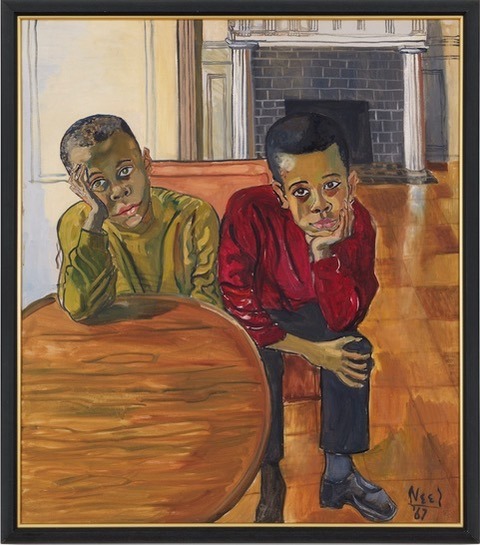
The Black Boys (1967)
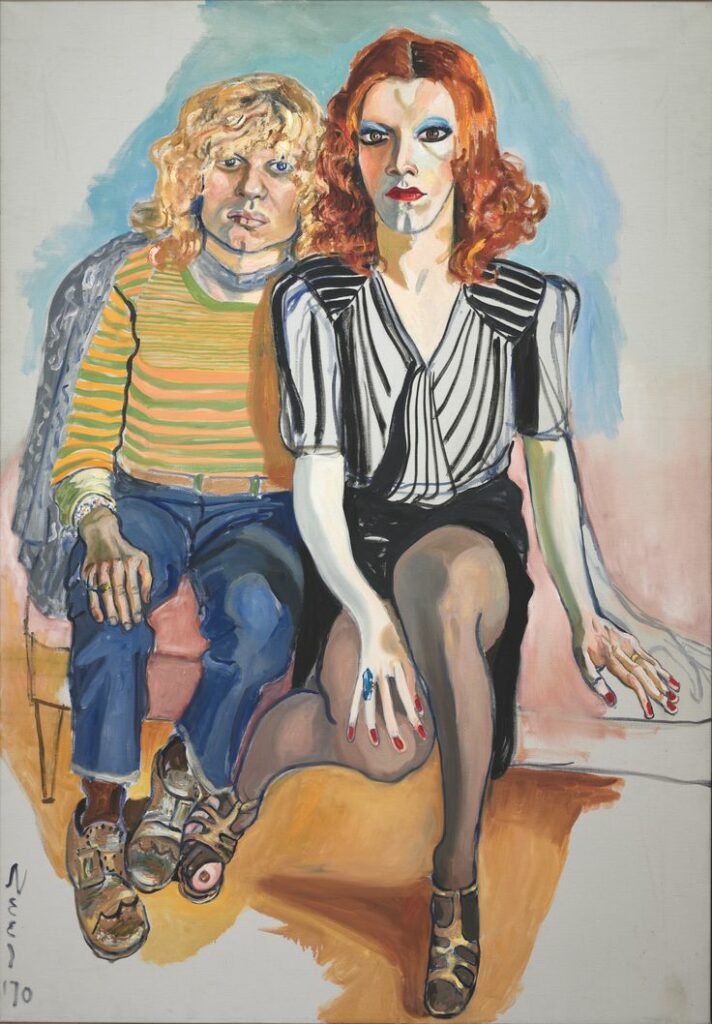
Jackie Curtis and Ritta Redd (1970)
Book of the Quarter
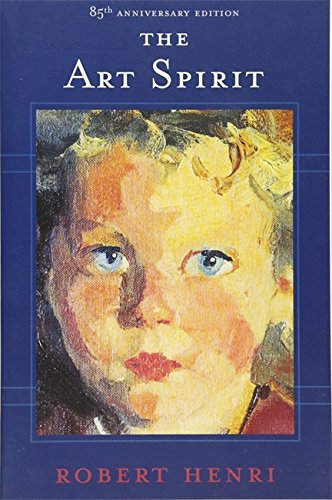
The Art Spirit
Robert Henri
Basic Books, 2007 (85th Anniversary Edition)
Paperback: 288 pages
Hundreds of artists, including Alice Neel, expressed the profound influence of Robert Henri on their art and lives. Henri was an American Painter and Lecturer (1865-1929). He believed that a practice in art, any art, can lead to a kind of happiness (what I might name as ‘fulfillness’). He even went so far as to suggest that the making of art – the close study of balance, order, judgement of relative values, the laws of growth, the economy of living – brought forth a kind of happiness for the world. He did not, however, say doing this would be easy, only that it is possible.
The book is an uncommon collection of lectures, critiques and comments gathered by one of his students, Margery Ryerson. Much more than that, The Art Spirit reads like an advanced coaching guide, one that uses our language, our lens of deepening, our modes of practice, our bent toward experimentation and commitment to service. Dare I say Henri offers a kind of faith in the practice of art. Certainly, it is the book I most needed right now.
One caveat, the book is dotted with technical advice for painters. Personally, I found it instructive, immersing myself and letting his encouraging tone and language wash over me (background/foreground, the purpose of tools, contrast, color and narrative), but I understand this may not appeal to everyone. His writing is dense and nourishing and had me stopping to reflect after just a few pages. I offer one of these moments below:
“ORIGINALITY: Don’t worry about your originality. You could not get rid of it even if you wanted to. It will stick to you and show you up for better or worse in spite of all you or anyone else can do.” (p. 78)
—Kerry Radcliffe
News & Updates
A new edition of a seminal work
NVW founder James Flaherty‘s bestselling book, Coaching: Evoking Excellence in Others, is now in its fourth edition!
The latest edition includes two brand new chapters: the first is on finding one’s inner guidance and purpose in traversing the world of work, especially in more uncertain working environments; and the second is on the topic of somatic intelligence. As in earlier editions, this foundational book in coaching clearly presents the theories, concepts and models, and then moves on to consider rigorous methods of practice and self-observation in a relationship of mutual trust, respect, and freedom of expression.
Classroom refresh!
In preparation for the return to in-person sessions, the Lauren Coaching Center in San Francisco is getting a makeover. Lighter walls, moveable desks, and (later this summer) new carpets wait to provide an inviting physical container for transformation, starting with Session 2 of PCC “M” in June. The classroom can’t wait to be danced in again! Learn about the difference between all-virtual and blended cohorts, and read our COVID safety guidelines here.
Updates from South Africa
Congratulations to the latest graduates of the Professional Coaching Course produced and led by our partners at the Centre for Coaching in South Africa. The names and locations of the folks in this impressive international cohort are listed in the graduate section below.
CfC is also launching “Leading with a Coaching Style,” a new set of 1- and 2-day short courses focused on transformative conversation skills. Learn more here.
Graduate News
Letter from the Graduate Community Steward
Dear graduates,
A few weeks ago I attended the Wisdom 2.0 conference, where the theme of Emergence felt immediate and powerful, as individuals and nations continue to emerge from the pandemic into a world shaken by war. New Ventures West was well represented by both attendees and on stage, and Jessica (NVW’s Enrollment Director) and I were delighted to reconnect with graduates and seekers.
While the last few months have proved that change is the only constant, our global community continues to bring compassion, integration, and presence to the people we serve. Whether a new graduate emerges from the PCC eager to continue their journey with additional training, or an older graduate emerges from decades of employment to re-engage with the methodology in support of a late life career change, New Ventures West strives to nourish your development and foster connection.
To that end, we have several offerings in the next few months. First, our Book Study Group will be engaging with topics as varied as aging with equanimity, the power of introverts in the workplace, and the wisdom of embracing uncertainty. Join us for discussion and a lively conversation with these authors. I enjoyed meeting so many of you at the last Graduate Community Gathering; our next gathering takes place on August 9th, and provides an opportunity to hold and be held by your peers and contribute your voice to shaping the offerings. We hope to see you there!
Love,
In loving memory
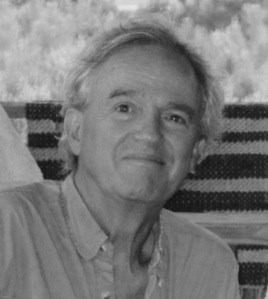
Tom Leppert was one of New Ventures West’s first students in 1988 (in Coaching I and Coaching II), and he also completed the PCC in 1999. He died on October 19, 2021 at the age of 74 after a short illness. He is survived by his wife Kit, three children, four siblings (one of whom, David Leppert, is also a PCC grad), and six grandchildren. From his obituary: “Tom was a devoted father and took great pride in his three children. Beyond his own family, he mentored and loved many other colleagues and friends. He made everyone he met feel like they mattered. As one friend reflected, ‘He very quietly and humbly did more for people than most will ever know.’” Read his full obituary here. Journey well, Tom.
Artists among us
Continuing the theme of relationship between art and coaching, here are two graduates making literal art in the world—notice the wisdom, embodiment, and receptivity they bring to what they create.

Poet Sarah Rosenthal (grad. 2014) has published a new chapbook titled “We Could Hang a Radical Panel of Light,” available for purchase here. She is featured in an anthology called The Beautiful: Poets Reimagine a Nation, available here. And! She recently moderated and participated in a recent panel discussion on art and embodiment. Congratulations, Sarah.
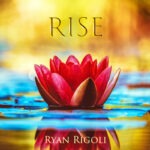
Ryan Rigoli (grad. 2010) released his new piano album, “Rise,” this past February. He says, “Over these past two years, life has guided me to see each moment as sacred, no matter how challenging, and to bring the aliveness of my heart to everything I do, and as often as I can. My intention was to bring this energy into my album.” You can buy the album and learn more about Ryan’s work here.
Congratulations and welcome to our newest graduates!
Robert Allen, Loomis, CA, USA
Mariano Alvarez, Costa Mesa, CA, USA
Bryce Anderson-Gregson, Centennial, CO, USA
Alison Bahr, Portland, OR, USA
Flora Bami, Geneva, Switzerland
Lindsay Barnett, Redondo Beach, CA, USA
Robin Belamaric, San Jose, CA, USA
Anu Bhangoo, Milwaukee, WI, USA
Krista Bloome, San Francisco, CA, USA
Joe Boggio, San Francisco, CA, USA
Benjamin Clarke, Marblehead, MA, USA
Dave Cortright, Palo Alto, CA, USA
Carlos Crabtree, San Diego, CA, USA
Shabnam Curtis, Ashburn, VA, USA
Dané De Klerk, Kempton Park, South Africa
Odelle de Wet, Johannesburg, South Africa
Ashna Decina, Randburg, South Africa
Hatice Dinc, Chicago, IL, USA
Guillermo Donadini, Surrey, UK
Meagan Erhart, Kennebunk, ME, USA
Christine Fenner, Denver, CO, USA
Jill Fox, Studio City, CA, USA
Griff Foxley, Snowmass, CO, USA
Jenny Garcia, Oakland, CA, USA
Malcolm Garth Gibson, Somerset West, South Africa
Alain Gingras, Longueuil, QC, Canada
Konstantina Gkiouleka Pataki, Gland, Switzerland
Rebecca Goldcrump, Portland, OR, USA
Hannah Gredley, Les Houches, France
Róisín Gregory, Cape Town, South Africa
Manti Grobler, Johannesburg, GP, South Africa
Inge Hansen, Palo Alto, CA, USA
Rachel Happen, Beaverton, OR, USA
Alex Hartzler, Mill Valley, CA, USA
Rayner Jae Liu, Los Angeles, CA, USA
Marlis Jansen, Mill Valley, CA, USA
Delanie Jooste, Piketberg, South Africa
Sara Kim, Seattle, WA, USA
Kasey Koopmans, Oakland, CA, USA
Patrick Kulati, Johannesburg, South Africa
Sarah Kyros, Papillion, NE, USA
Alex Lata, Cape Town, South Africa
Karen Levy Strauss, Centurion, South Africa
Linda Lucas, Lake Oswego, OR, USA
Natalie Lumpkin, Seattle, WA, USA
Tory Martinez, Larkspur, CA, USA
Mary-Lynn Masi, Noank, CT, USA
Lauren McCrea, San Francisco, CA, USA
Shelley McIntyre, Seattle, WA, USA
Anna Minto, Dallas, TX, USA
Wendy Mitch, Plover, WI, USA
Peter Mithamo, Cape Town, South Africa
Gilbert Mixon, Los Angeles, CA, USA
Devisundrie Moodley, Johannesburg, South Africa
Itumeleng Mosiane, Johannesburg, South Africa
Corina Ruxandra Negru, Amsterdam, South Africa
Justine Neke, Johannesburg, South Africa
Tiffany Newell, Atlanta, GA, USA
Anthea Oosthuizen, Cape Town, South Africa
Jen Person, Hesston, KS, USA
Marcia Poppe, Rio de Janeiro, Brazil
Nataliya Prongué, Vich, Switzerland
Mitzi Rapkin, Basalt, CO, USA
Dot Reilly, San Francisco, CA, USA
Chirona Risom, Portland, OR, USA
Janece Rittenberry de la Plante, Oakland, CA, USA
Michelle Sarchiapone, Portland, OR, USA
Jahanavi Schriefer, Gamleby, Sweden
Kat Schulte, Holland, MI, USA
Kevin Selig, Grosse Pointe Park, MI, USA
Keneiloe Sibisi, Pretoria, South Africa
Firuzan Speroni, Chicago, IL, USA
Trenisha Subajan, Cape Town, South Africa
Thomas Sulzbacher, Albany, CA, USA
Andrij Svatok, Belgrade, Serbia
Vishnu Swaminathan, Fairfax, VA, USA
Yelley Taylor, Renton, WA, USA
Molly Torman, Denver, CO, USA
Andee Weinfurter, Sausalito, CA, USA
Tania Wener, Cape Town, South Africa
Chloe Wilder, Los Angeles, CA, USA