Spring 2017
The Basis of Judgments
I often joke in my California classes that the worst thing that you can do here is “be judgmental”—being unkind, impolite, untruthful, aggressive, even murderous does not get as much negative response as making judgments. (Only a slight exaggeration.)
Featured Article • The Basis of Judgments
The Basis of Judgments
by James Flaherty
I often joke in my California classes that the worst thing that you can do here is “be judgmental”—being unkind, impolite, untruthful, aggressive, even murderous does not get as much negative response as making judgments. (Only a slight exaggeration.)
In our current world common sentence beginnings are “I don’t want to be judgmental but…” or “I don’t want to sound judgmental but…” In other words we don’t want to be judged ourselves for making judgments about other people. Odd, isn’t it, that we collectively enforce the social rule against making judgments by making judgments?
Maybe judgments are automatic and unavoidable.
Certainly our nervous system, often below the level of conscious awareness, determines whether a situation is safe for us or not. (This is the territory of social neurobiology, which you can read about in Mindsight by Dan Siegel and The Polyvagal Theory by Stephen Porges.) We usually step in or away from the situation based upon this judgment.

A central tenet of Buddhism is that all experience comes with a judgment attached: we like it, we don’t like it, or we don’t feel one way or the other about it.
I once went in to my Buddhist teacher and told him after hearing this teaching that I had been watching my experience during sitting and found a part of me that was not drawn into liking / not liking / being neutral.
He spontaneously broke into uproarious laughter and said, “I’m sure you liked that.” Yeah, so maybe no escape.
Last week during our Book Study Group teleclass with Jett Psaris, the author of the extraordinary book Hidden Blessings : Midlife Crisis as a Spiritual Awakening (the Book of the Quarter reviewed in this issue), I saw / felt / knew the boundaries of my judgments.
Perhaps as I describe mine you can find yours.
Jett has a section in her book inviting us to receive physical symptoms as a message about what is happening or necessary or currently neglected in our soul. She used what I took to be a fierce example: someone with Alzheimer’s.
I asked her about it and she said her mother had Alzheimer’s for the last 12 years of her life, and she considers herself someone very familiar with the territory.
Instead of trying to bring her mother back to the “real world,” she joined her mother in the reality that her consciousness was bringing forth. Jett unconditionally radically embraced, accepted and stepped into her mother’s reality and said she could meet her there.
Wow. At that moment, I recognized cognitively, emotionally and somatically that I had a very narrow space in which to meet reality—it had to fit into my culturally socialized notions of what was good, healthy, life-giving, normal. Anything not within that space was to be fought with, complained about, rejected, ignored.
I saw how centrally I’d placed my judgment of what should be happening. I definitely knew best, and life, the universe, divine intelligence, Buddha nature were making a mistake.
Huge arrogance covering up the fear of helplessness.
My judgment also separated me out from the process of life: I was not life showing up at a particular place but someone outside of it who could pass judgment that was valid because it felt that way and because almost everybody I knew would agree with me.
I’m left wondering how much I can let go and accept / love what’s occurring with the deep faith that it’s a call to develop more, let go of my understanding, stay open to what might unfold instead of judging, separating, trying to get away and protect.
Can you sense, feel the reality that you are trying to maintain by the judgments you make?
Yes, it’s stepping outside of conventional wisdom, what everyone knows, what makes sense.
What happens when we do that?
Here‘s the nearly unbelievable story of a friend who did that in the midst of a tragic event.
What is possible for you?
Do you want to find out?
This issue’s poems, book review and practice can help you.
Take care of yourself.
Love,
Practice • How Judgments Limit You
Focus: How Judgments Limit You
Please do this practice for 30 to 45 days.
Please stop three times per day and ask yourself the following questions. Please take brief notes so that you can begin to notice patterns and can deepen your insights as you go.
During this period of time:

- What decisive judgments did you make about what was good, worthy, acceptable? Or the opposite: what was bad, worthless, to be rejected? (Please don’t be fooled by the notion that you are not making any judgments; rather, please uncover them with courage and candor and a willingness to be startled or embarrassed.)
- What were you attempting to hold onto, move towards in making these judgments? Or, alternately, what were you trying to avoid, move away from?
- What did you close down by making these judgments (of whatever sort)? What were you holding onto?
- What can you do during this next period of time to release your judgments as you become aware of them and fully enter into the mystery of what’s unfolding?
Poetry & Reading
Poems of the Quarter
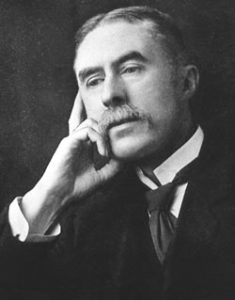
Loveliest of trees
A.E. Housman
Loveliest of trees, the cherry now
Is hung with bloom along the bough,
And stands about the woodland ride
Wearing white for Eastertide.
Now, of my threescore years and ten,
Twenty will not come again,
And take from seventy springs a score,
It only leaves me fifty more.
And since to look at things in bloom
Fifty springs are little room,
About the woodlands I will go
To see the cherry hung with snow.
from Remembrance
Arthur Rimbaud, translated by Paul Schmidt
II
Watch! This wet square of stream moves in soft swirls,
In endless glassy gold pavilioning its bed;
Like willow trees where birds hop unhindered
Are the green gauzy dresses of the little girls.
Flowers brighter than coin, warm yellow eyes
That trouble waters—O Wife, your conjugal love!—
The rosy Sun at noon burns sullenly above
This dark mirror, reflected through hazy skies.
Hear How It Bellows
Arthur Rimbaud, translated by Paul Schmidt
Hear how it bellows
Beneath the acacias
In April, the green
Branch of the vine!
In a cleansing cloud
To Phoebe! See them nod
And turn a head
Like saints of old …
Far from shining stones
On capes, from bright roofs,
Dear Ancients desire
This sullen syrup …
Never festive, not
Astral, the misty
Breath of this
Nocturnal scene.
Yet still they stay
… Germany, Sicily,
In this sad pale
Mist, and justly.
City
Arthur Rimbaud, translated by Paul Schmidt
I am a temporary and not at all disconnected citizen
Of a metropolis considered modern because all known taste has been eluded
In the furnishings and the outsides of the houses,
As well as in the plan of the city.
Here you will find no trace of a single monument to superstition.
Morals and language have been reduced
To their simplest expression, that is all!
These millions of people with no need to know each other
Lay down so equally the path of education, of trade and old age,
That the course of life is probably several times shorter
Than anything a crazy statistic sets up for people on the continent.
And from my window, what original specters roll
Through this thick eternal smoke—
Our Crowded Shade, our Midsummer Night!
Latter-day Erinys fly before this cottage
Which is my country and the depth of my heart,
Because everything here looks like this:
Dry-eyed Death, our diligent daughter and servant,
A hopeless Love and a pretty Crime wailing in the mud of the road.
Book of the Quarter
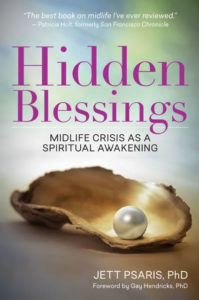
Hidden Blessings: Midlife Crisis as a Spiritual Awakening
Jett Psaris
Sacred River Press, 2017
Paperback: 278 pages
Maybe this happens for you sometimes. While reading a book you begin to notice that you’re discovering something about yourself that you didn’t know and weren’t even looking for. You become aware of deep, strong emotions being stirred and memories long buried surfacing. Without any effort life events that seemed random at the time begin to coalesce into meaningful insights with explanatory power. And you begin to have new understandings of people, even those you know very well.
All that and much more happened for me when I read this extraordinary book by the amazing Jett Psaris. She took about 12 years to write her way out of her own dark, powerful, disturbing midlife crisis eventually compiling over 1,000 pages, which she uses for her online program Midlife Leap.
While walking the full 500 miles on the Camino in Spain she saw a way to present the material in book form so more people could have access to it.
The result is a beautifully written, gripping revelation of the spiritual process many people 45 to 65 years old enter into, usually unbeknownst to them. Jett presents the full reality of this journey—including its terribly difficult elements—with luminous clarity and encompassing compassion so we can recognize its appearance in our own life as an invitation and not as a threat. A high level of spiritual alchemy indeed.
Her book is full of moving examples and replete with many exercises that draw the reader into deep personal inquiry. She evokes a liminal space in which our usual explanations are suspended and we wonder what is happening: what is our life, really; who are we, truly; what are we part of, in fact? Our everyday, conventional narratives fall away and we find ourselves in the middle of……..
A foundational essential guide to anyone who is 45 to 65 years old, is going to be that old, or has been that age.
I don’t think you can fully understand yourself, your life or the people around you without reading this book. Yeah, it’s that important.
— James Flaherty
News & Updates
Masterful Conversations with James Flaherty
Learn the subtle elements of conversations: what they are, when to use them, and how they can change everything
There are components of conversations that few people know or use consciously. Becoming adept with them has the potential to deepen relationships and have organizations function more effectively. Masterful Conversations is a rare chance to learn and practice this essential skill set.
James Flaherty has been studying conversations for decades, both as a student of experts in the field and as a coach of influential leaders. He distills this vast experience into a course that is, like all NVW classes, as rigorous as it is transformational.
There are three kinds of conversations which you’ll study in depth: Conversations for Relationship, for Possibility, and for Action. You’ll learn the flow of each, their uses and their pitfalls. There are also the parts of speaking: Assertions, Assessments, Declarations, Requests, Promises, and Offers—all of which have distinct purposes. You’ll hone your skill in using each appropriately.
All this and much more will be done experientially over three days in the course itself. Prior to the class, you’ll study your own experience of conversations, gathering up useful material to work with in the class. There is an opportunity to hone and refine what you learn over the subsequent six months in an optional teleclass.
As of this publication, the inaugural San Francisco course on June 14-16 is full with a waiting list. The next public courses are in Singapore in July and in San Francisco in November. Register now to be sure you get a seat!
Masterful Conversations is also available as an organizational offering. If this is something you think would benefit you and your colleagues, contact us to learn more.
Formation des coachs professionnels à Paris!
Á droite: Les participants au CTE tenu à Aix-en-Provence plus tôt cette année.
La table est mise! Convives attendus à coeur ouvert! Passez le mot…nous lançons notre première cohorte francophone en Europe cette année. Venez vous joindre à nous pour vous initier à l’approche intégrale ou pour vous engager dans une démarche de certification professionnelle et de transformation personnelle.
Nos programmes
Formation des coachs professionnels
À Paris à partir d’octobre 2017
Principes de coaching et développement intégral
Du 19 au 21 septembre en Bourgogne
Coaching vers l’excellence
Les 18 et 19 mai à Marseille – en anglais – et en septembre à Aix-en-Provence (Contactez Sophie Clergue.)
Pour connaitre notre approche et nos programmes de coaching en développement intégral, rendez-vous au convivium.com.
Associate Coaching Course – Coaching For Development in Switzerland
The first ACC in Switzerland finished big this past March (right). The next course begins this fall at Château de Bossey (Bogis-Bossey near Geneva).
Course dates:
Session 1: 6-8 September 2017
Session 2: 6-8 December 2017
Session 3: 19-20 April 2018
An early-bird special is available for the first few applicants to the course. Apply soon to secure the discounted tuition. Learn more.
Graduate News

Letter from the Graduate Directors
Dear graduates,
This quarter we welcome over 80 new Integral Coaches from around the world into our graduate community—our biggest crop in quite some time! It’s always a joy to add new voices, perspectives, experiences, and wisdom to to the group. As you know, our training is not just about learning to coach, but about coming home to yourself. As such, many of us find ourselves in surprising places as we connect more deeply to our voice and vocation during and after the PCC. Our global community is like a prism, forever refracting brighter and brighter light into new shapes and colors.
You, our graduates, continue to be the primary way new students hear about us. Your way of being serves as a beacon for others wanting to live lives of meaning and service. Please continue to tell others—through your words and your way of being—about what becomes possible when we engage the work of Integral Coaching.
We’re also thrilled about our new program Masterful Conversations. For those of you who were craving more on this topic—particularly back when it was an optional early-morning module during session 2 (or before that, when it wasn’t part of the curriculum at all!)—will find this course especially fulfilling.
Finally, if you’ve written anything recently about mindfulness, the Enneagram, Integral Theory, or any other topics that are touched on in the PCC, we’d be happy to feature you as a guest author on our blog. Send submissions to [email protected].
Enjoy your spring.
With love,
Love,


Adam Klein and Sahar Azarabadi
Grad News
The graduates of Sarita’s recent Towards Mastery program in Washington DC are clearly ready to take on the world. Congrats, friends! Go forth and be masterful.
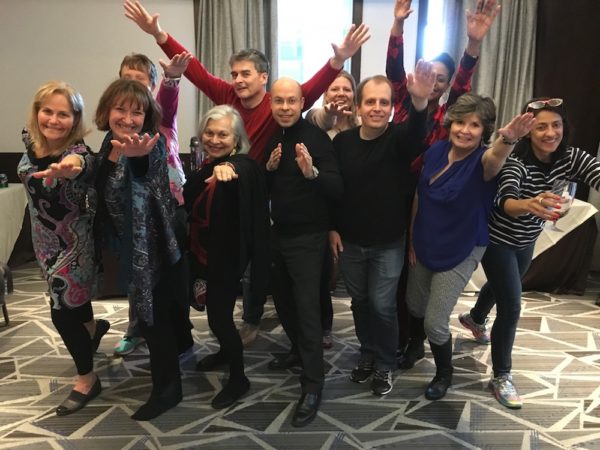
Congratulations and welcome to our new graduates!
Jennifer Barnes, Littleton, CO, USA
Olivia Batt, Saratoga, CA, USA
Briana Bellamy, Pacific Grove, CA, USA
Rishard Bitbaba, Pleasanton, CA, USA
Linda Bolton, Constantia, South Africa
Lucie Bouchard, Farnham, Quebec, Canada
Kate Bradford, Parkview, South Africa
Bjefke Breebaart, Pretoria, South Africa
Rebecca Brockelman, Topsfield, MA, USA
Gabriela Cadena, Frederick, MD, USA
Juliana Clawson, Elkins Park, PA, USA
Amanda Copple, Arvada, CO, USA
Maureen Crittenden, Oakland, CA, USA
Gretha Cronje, Somerset West, South Africa
Ashley Davis, Chevy Chase, MD, USA
Corine de Hemptinne-Morel, Sausalito, CA, USA
Wendy De Hoef, Redmond, WA, USA
Graeme de Villiers, Johannesburg, South Africa
Phetsile Dlamini, Pretoria, South Africa
John Douglass, Portland, OR, USA
Christian Filli, West Lake Hills, TX, USA
Julie Fortin, Saguenay, Quebec, Canada
Josée Fournier, Montréal, Quebec, Canada
Juliana Frost, Colorado Springs, CO, USA
Andrea Garfield, Cupertino, CA, USA
Laura Gladish, New York, NY, USA
David Grant, San Francisco, CA, USA
Catherine Gray, Muir Beach, CA, USA
Nathalie Grenier, Sherbrooke, Quebec, Canada
Julia Guerin, Levallois, France,
Teresa Hadly, Alameda, CA, USA
Mark Hele, Sandton, South Africa
Andrea Hoban, Walnut Creek, CA, USA
Renee Hollinger, San Francisco, CA, USA
Dominique Jarvis, Montréal, Quebec, Canada
Martina Jecker, Stanford, CA, USA
Karen Jones, San Francisco, CA, USA
Vedrana Josipovic, Zagreb, Croatia
Fahmeeda Khan, Rylands, South Africa
Teresa Keller, San Francisco, CA, USA
Derek Kirkland, Gilbert, AZ, USA
Yev Kirpichevsky, Washington, DC, USA
Cindy Land, Hayward, CA, USA
Kingsley Lenkokile, Pretorius Park, South Africa
Jeremy Levie, San Francisco, CA, USA
Emily Lin, New York, NY, USA
Leta Macrigeanis, Lake Oswego, OR, USA
Ann Manix, Bloomfield Hills, MI, USA
Lisa Marcelonis, Pensacola, FL, USA
Tobi Marcus, Carmel, CA, USA
Nancy Martin, Saint-Antoine-de-Tilly, Quebec, Canada
Ward McDonald, Oakland, CA, USA
Ken McKenzie, Constantia, South Africa
Ann Mary Mercier, Chambly, Quebec, Canada
Chomel Minnaar, Johannesburg, South Africa
Lorato Mosetlhanyane, Gaborone, South Africa
Mike Olivier, Umhlanga Rocks, South Africa
Molly Olson, Newberg, OR, USA
John Ott, Cumming, GA, USA
Theresa Pak, Sacramento, CA, USA
Ivanna Peretyagina, Moscow, Russia
Patricia Perillo, Cornelius, NC, USA
Gerhard Pietersen, Hout Bay, South Africa
Gerald Robbins, Black Diamond, WA, USA
Alessandra Ross, San Francisco, CA, USA
Eva Schiffer, Washington, DC, USA
Kevin Schmid, St. Petersburg, FL, USA
Sharon Shirley, Winter Park, FL, USA
Lynn Simon, Davis, CA, USA
Alexa Stafford, Randburg, South Africa
Martina Struck, Wood-Ridge, NJ, USA
Véronique Tabuteau, Camon, France
Monica Tanase-Coles, Baltimore, MD, USA
Jessica Thomas, Oakland, CA, USA
Ted Thornton, Emeryville, CA, USA
Jenny Tinmouth, Gauteng, South Africa
Lulama Tlakula, Gauteng, South Africa
Anwar Van der Schyff, Durbanville, South Africa
Fabrice Vil, Montréal, Quebec, Canada
Rebecca Ward, Novato, CA, USA
Jennifer Whitty, Benicia, CA, USA
Lisa Yu, San Francisco, CA, USA
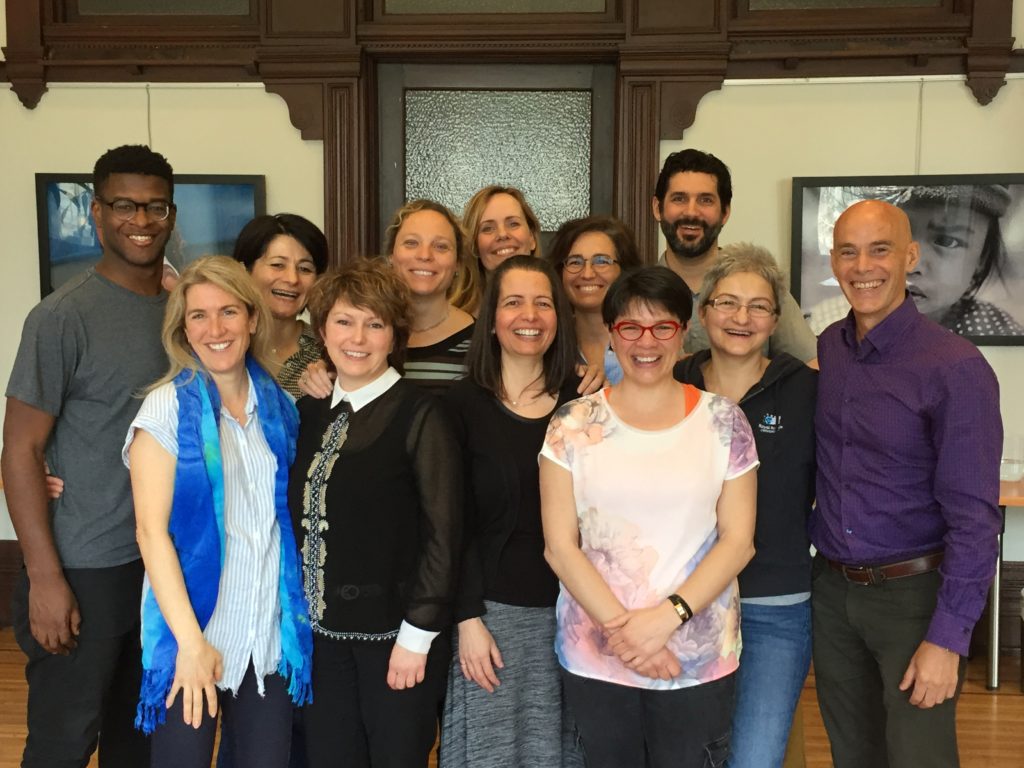
The happy graduates of Formation des Coachs Professionnels “H” in Montreal this April