Autumn 2018
Seeing Goodness in Others: Can You Do That? Do You Want To?
In seeing, feeling, sensing the goodness in others we could relax, release our scanning procedures, step back from being in agitation and stress, and engage less protective/defensive behaviors.
Featured Article • Seeing Goodness in Others: Can You Do That? Do You Want To?
Seeing Goodness in Others: Can You Do That? Do You Want To?
by James Flaherty
Listen to “Never One Thing” by May Erlewine. 
Perhaps we could reverse the worldwide pandemic of anxiety and its costly toll on our personal and relational health. Maybe we could reinvest the $1.7 trillion we spend on weapons each year worldwide.
Probably social justice and greater economic equality would follow our knowing the goodness of others in our bones, in our hearts, and in all our speaking and behaving. Too many of us justify discrimination, unfair laws, excluding others because we do not know their goodness.
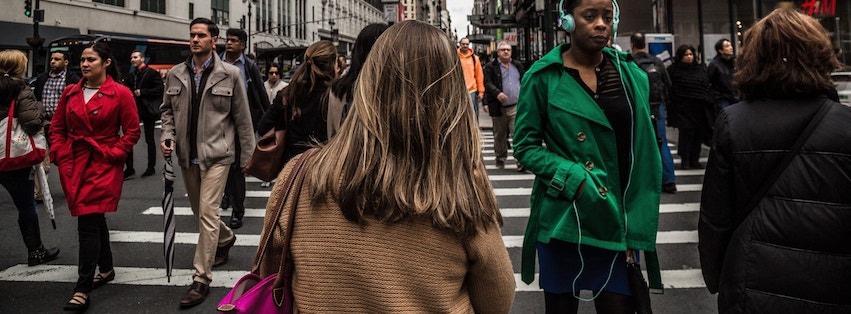
With all these potential positive effects, why does it appear so difficult for us to see the goodness in others?
There are many reasons for it being not so easy (you will notice them right away as you pay attention to what captures your awareness).
We are biologically/ evolutionarily organized in our nervous system/perceptual system to notice what’s wrong, what’s off, what’s threatening. The rest usually falls into the background. Our body has survived by being very efficient, only expending energy when necessary. This principle applies most urgently towards our brain, which uses vast amounts of energy. Thinking, analyzing, challenging our beliefs all come at an energetic cost.
Consequently, we are almost never aware of the good people surrounding us as we walk down the street, wait in line, merge in traffic. They are not dangerous.
Cultures and other intact groups survive by establishing and maintaining strict rules about who is a member and who’s not. On many occasions membership confers inherent goodness and consequent value. Outsiders have to earn it, which means that we would have to spend time and energy evaluating their worthiness, and we often don’t— perhaps usually don’t.
Whom do you exclude from the possibility of having goodness because s/he is a member of a particular political party, ethnic group, socioeconomic class, job category and so on?
We have so many rules, endless standards about goodness, which float and alternate according to situational pressures, our current state of presence/stress, our familial/personal background, our physical/somatic condition. Therefore it is really difficult for us to know anyone as good, especially those who have different rules and standards.
We become aware of our criteria for goodness mostly by people violating them, and for the most part we haven’t questioned them, studied their origins and the consequence of living from them.
Why would we do this kind of inquiry? We don’t unless something interrupts us, and these interruptions almost always are a consequence of counting on the goodness of someone who doesn’t come through—rather than from not appreciating it in them.
By adulthood many of us are cynical about the possibility of goodness—we’ve been let down too many times, we’ve betrayed our own values and can’t seriously believe that other people hold to theirs.
What would you add to this list of what makes seeing goodness in others difficult?
So, okay, it may be difficult in these and many other ways but, given its importance, how do we go about building this skill and making it into the normal, natural way we see people?
I don’t have a simple answer and consequently have dedicated this year’s Year Launch workshop and six-month follow-on teleclass to the topic. But I can lay out a proposed process and offer the following poems, practice and book as supports, as starting places.
Proposed Process
- Declare, clarify, sort for yourself your particular reasons for committing to seeing the goodness in others. No one else’s reasons will suffice. It’s unlikely that any moral browbeating from others or inner-critic attack from yourself will maintain your motivation over time and through the accompanying difficulties/challenges.
- Make a never-ending list (one that you keep adding to and subtracting from as necessary) of ways you have felt betrayed, let down, hurt by relying on goodness in others that wasn’t there when you needed it. Work with each of the major examples one by one, letting yourself fully sense somatically, feel emotionally, and notice cognitively the experience accompanying what seems to you to be lapses of goodness. As you are with your experience, please open yourself up to letting go, forgiving everyone involved, including yourself.
- Make a separate never-ending list of people whose goodness you found reliable. Write out or tell someone how important this goodness has been for you, including its impact on your character, your sense of possibility, your trust in life and so on.
- Make a list of your own goodness and then verify its existence by observing yourself over 10 to 14 days. Closely notice the reality of goodness as distinct from any rarefied perfectionist notions you might have of it.
- And then take up the practice of the quarter—which you could also do on its own but would be most powerful if you would precede it by what’s listed here.
Please do take up generating/uncovering/seeing the goodness in others. It will go a long way to healing your own heart and mending the rifts within and between the people in your life.
Take care of yourself.
Sending love,

Practice • Seeing the Goodness in Others
Seeing the Goodness in Others
I recommend you do the activities outlined in the lead article before taking this one up.
Please take up the practice for 30 to 45 days.
Please stop twice each day and write out brief answers to these questions.
During this period of time:
- What goodness did I see/feel/sense in others?
- What had me experience it as goodness?
- What specific effects did the goodness have on me, on others, on the situation?
- What can I do to become a better experiencer of the goodness in others in the next period of time?
Poetry & Reading
Poems of the Quarter
heretofore unuttered
Nicole Sealey
As if god, despite his compulsions, were decent
and hadn’t the tendency to throw off
all appearance of decorum, here I am
admiring this single violet orchid.
How lucky am I to go unnoticed
or so I imagine, when, at this writing,
there is a red-tailed hawk, somewhere,
tracking the soft shrills of newborn songbirds—?
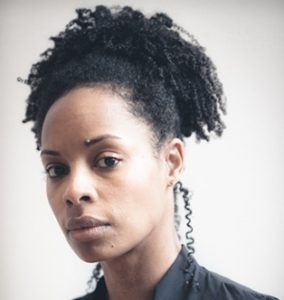
American Sonnet for My Past and Future Assassin
Terrance Hayes
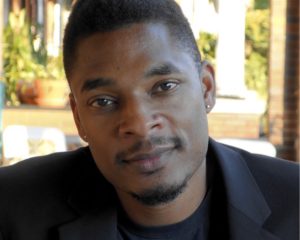
Why someone would crowd into a church is beyond me.
I would remodel Alabama. Why there is a science
For God is beyond me the way the word wallop
Is beyond me. And when my id is arrested, I am usually
Thinking of the tragi-comic implications fo the word
Mall & eyeballing midriffs. Why youth seems to be
My only requisite for beauty now is beyond me.
The interiors of the words botox & toy box are beyond me too.
History is beyond me. I will need a black suit & umbrella now.
The carpet along the aisles will be so thick, our shoes
Will never touch the floor. Limousines tinted with flowers
Will be parked in front of the church. Ma will say “Good God,
Good God,” dipping money in her eyes. But why
Give God your money? Why give good money to Death?
Poems by Hafiz
From A Year with Hafiz, Ed. Daniel Ladinsky
Sigh and Giggle
Hafiz

When was the last time you wallowed in
contentment,
maybe lay in bed for two days just making
your lover sigh and giggle, and she
and you talked silliness for hours and
joked at the sweet insignificance of most
all stuff?
Cuddle up with the stars more. You will be
able to do that
if you can start treating every human being
as a sacred cow,
and keep a few of my poems handy.
Who Wants Those?
Hafiz
I am at a juncture now where I never have to
be serious again.
If I act that way—sober and concerned about
something … it is just a charade.
For people who are serious, well, let’s face it …
they seem to have lots of problems.
And who wants those?
Book of the Quarter
A Year with Rumi: Daily Readings
Coleman Barks
HarperOne, 2006
Hardcover: 432 pages
Taking five to ten minutes each day to read the transcendent, illuminated words of this awakened poet will open your life and heart in life-giving ways.
Rumi sees/feels/knows goodness everywhere. He encounters it in every breath, in each face, in all events, everywhere in nature. He does not exaggerate, cover over, ignore, justify. Instead, by meeting all of it with a quiet mind and heart, he directly encounters the truth of everything—it’s innate, imperishable, incorruptible goodness.
His poems gloriously and effortlessly balance the troubling words, sounds, images that tsunami into our lives each day. At first, reading him might be similar to reading fiction about a far-off, beautiful paradise. Persist though and you will feel his invitation to peep through the hole he’s poked in our pained, cynical conclusions.
Carry on even more and the peep hole will open itself into a window, then a panoramic view, and then…
You could find no better companion on the journey to seeing the goodness in others than our dear, faithful friend Rumi.
— James Flaherty

News & Updates
Develop Coaching Capacity within Your Organization
Announcing Coaching For Development
More frequently, large organizations are choosing to build internal coaching capacity to augment (or replace) the hiring of external coaches. This approach generally reduces the cost of coaching and allows the organization to offer coaching services both more broadly and more deeply within the organization. New Ventures West offers a powerful in-house program to support your organization in this direction.
Coaching for Development is a six-month intensive coach training and apprenticeship program. It presents the method in a way that is elegant and easy to scale. The program consists of 3 in-person sessions with coursework, practice and coaching support in between. Elements of the course are easily customized to suit the needs of your team or organization. This ICF-approved program opens the door to ICF credentialing for your internal coaches.
If this is a direction your company has been considering, please be in touch to explore what is possible.
She said “yes!”
It’s our great pleasure to share the news that Janine Ahlers and Craig O’Flaherty, our senior faculty members in South Africa, became engaged in September! We couldn’t be more thrilled for our good friends. Please join us in wishing them every happiness.
New workshops in Switzerland
These upcoming one- and two-day programs are presented by the Centre for Coaching in Château de Bossey, near Geneva. Click on the course names below to learn more.
Mentor—Amplifying Talent: Explore how to amplify talent through mentoring, with a clear focus on the experiential & practical vs academic & theoretical. November 20.
Building Resilience—a Journey to Thriving in Adversity: Assess your own level of capability and design your personalized roadmap to resilience. November 27.
Leading Through Coaching: Learn how you can shift your conversations and interactions to impact your relationships and the bottom-line results of your team. December 4-5.
The first Paris PCC is complete!
This radiant group of students in the first-ever Programme de formation des coachs professionnels (French-language Professional Coaching Course) in Paris graduated in October. Their names are listed among our new graduates in the next section. Félicitations!
Graduate News
Letter from the Graduate Department
Dear graduates,
2019 brings a great number of opportunities to renew your certification, refine your coaching, and hone your contribution to a world that needs you very much. With all that’s on offer, we’d like to help you decide which of these programs—if any—are calling to you most strongly. Here are some things to note about each.
On the horizon for next fall is Advanced Practitioner Training, a new five-day training followed by a five-month teleclass. This course will immerse you in the most up-to-date iteration of the method, including new assessment models and ways of working with clients. Naturally, it will also invite you into a deeper level of development. Where the focus of the PCC was on moving from Balance toward Conversations in the Ten Ways, this course invites a shift from Conversations into Power. The 20-person cohort will consist of a select group of coaches and there are only 5 seats left, so consider submitting your application soon.
Case Supervision begins in March. This is a yearlong teleclass where James works with a group of 12 coaches, offering guidance and feedback to two people per call. You’ll be working with current cases, so you’ll need to be actively engaged with at least two clients. It’s a chance to add greater rigor and nuance to what you’re doing with your clients. The teleclass format often works well for those who don’t live near one of our centers.
On the more immediate horizon is Year Launch, the annual workshop designed to set up your development for the year ahead. Each year James cooks up something novel, and it is always a mixture of playfulness and transformation. This year’s topic is “Seeing and Freeing the Goodness and Power in Others” (also the topic of this issue’s lead article and the theme of the quarter). You can join your fellow grads in person in San Francisco or DC and/or join the six-month teleclass that follows.
Finally, Masterful Conversations returns to the Washington DC area in February. This three-day course is the only offering of its kind out there. It’s based on James’s years of study with Fernando Flores (Speech Acts) and decades of coaching high-level executives. Dozens of graduates and newcomers alike have experienced powerful benefits from this program—you don’t have to be an NVW graduate to attend—so you might consider joining with your colleagues.
So there you have it! Please be in touch any time to talk through the options in more depth.
May these darkening days find you turning toward your inner light.
With love,


Sahar Azarabadi and Adam Klein, Graduate Directors
Reunion in DC
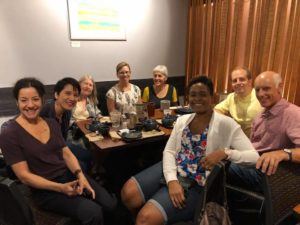
A group of alumni, whose graduation years span a decade and a half, gathered in the Washington DC area recently to connect, catch up, and support one another. From left to right: Sandy Florian (2018), Shana Montesol Johnson (2016), Lea Mesner (2002), Sarah DeWitt (2018), Cathy Raines (2002), Simone Gooden (2011), Rivers Lamb (2014), and Oscar de Bruyn Kops (2018)
Congratulations and Welcome to Our New Graduates!
Alex Bierach, Mountain View, CA, USA
Michael Boey, SINGAPORE
Jancy Castro, Heredia, COSTA RICA
Yan Yi Chee, SINGAPORE
Jean Coté, St. Constant, QC, CANADA
Pierre-Emmanuel Dautreppe, Brussels, BELGIUM
Anna Davda, Oakland, CA, USA
Olivier Del Bucchia, Paris, FRANCE
Charles-Louis De Maere, Grez-Doiceau, BELGIUM
Linda Doku, SINGAPORE
Fionna Douglas, Cambridge, MD, USA
Jaune Evans, San Rafael, CA, USA
Joshua Fields, San Francisco, CA, USA
Annette Finsterbusch, Los Gatos, CA, USA
Alexa Fletcher, Saratoga, CA, USA
Sandy Florian, Washington, DC, USA
Florence Galametz, Sevres, FRANCE
Chris Galea, SINGAPORE
Thomas Gibot, Annemasse, FRANCE
Angelina Hansen, SINGAPORE
Jonathan Hastings, Tigard, OR, USA
Belinda Hau, Kowloon, HONG KONG
Heather Hawley, Burlingame, CA, USA
Wilbur Herrington, Boston, MA, USA
Martine Hill, SINGAPORE
Amy Hillyard, Oakland, CA, USA
Emily Holland Hull, Washington, DC, USA
Arif Iqball, Kyoto, JAPAN
Alex Ivanov, San Francisco, CA, USA
Sunny Iwasaki, Kobe, JAPAN
Jenny Jaksic, Spearwood, AUSTRALIA
Lucas Jiang, SINGAPORE
Joachim Joerger, SINGAPORE
Elma Johnson, Oak Park, IL, USA
Ann Marie Jones, Traverse City, MI, USA
Michelle Kemling, San Francisco, CA, USA
Amy Klous, Cushing, WI, USA
Jason Lai, SINGAPORE
Carol Lalezarian, Los Angeles, CA, USA
John McCarthy, Del Mar, CA, USA
Jolynn Mitchell, Portland, OR, USA
Janine O’Neill, San Francisco, CA, USA
Bruno Occhipinti, SINGAPORE
Sue Olivier, SINGAPORE
Jorge Osorio, SINGAPORE
Tanya Podvrsan, Oberhausbergen, FRANCE
Emma Russell, Kuala Lumpur, MALAYSIA
Nedjma Saidani, Fribourg, SWITZERLAND
JuHae Son, Mountain View, CA, USA
Maryse St-Denis, Beaconsfield, QC, CANADA
Gillian Tan, SINGAPORE
Suzanne Thomas, Alexandria, VA, USA
Kim Trajano, San Francisco, CA, USA
Jennifer Tranter, San Francisco, CA, USA
Phounpadith Virasack, Torcy, FRANCE
Maura Wolf, Moraga, CA, USA
Minji Wong, San Francisco, CA, USA
Ji Hee Yeo, SINGAPORE