Winter 2017
Giving Our Life a Center: Part 3
Our shared social world has clearly shifted since November. Abrupt unpredictable change in long-established traditions and a mood of fear/uncertainty/incredulity/despair/anger permeate our conversations and consciousness.
Featured Article • Giving Our Life a Center: Part 3
Giving Our Life a Center: Part 3
by James Flaherty
“i imagine that yes is the only living thing.”― e.e. cummings
Our shared social world has clearly shifted since November. Abrupt unpredictable change in long-established traditions and a mood of fear/uncertainty/incredulity/despair/anger permeate our conversations and consciousness.
Many, many people are very clear about what they want to say “no” to in terms of how people are treated and spoken about, to radical cruel cuts to investments and policies designed to take care the most fragile and disadvantaged among us, to an overall coarsening of our public/political discourse.

What would you add? What are you saying “no” to?
Whole communities, entire organizations are preparing themselves to defeat, thwart, slow, dilute unwanted changes. Antiwar, anti-apartheid, anti-discrimination, anti-authoritarian movements have made a huge impact during the last century.
Saying “no” certainly has its place but cannot, it seems to me, hold the central place in our lives. As humans we need a positive direction to move in, a life-giving vision to inform our actions. Love must be the foundation, the guiding principle and energetic source of our daily lives, otherwise we fall into pointless cycles of revenge/retribution, burn out with resentment when our best efforts fail or are not appreciated, become cynical tacticians concentrated only on winning.
The “no” I’m speaking about often has its roots in rage. But contrary to some current political analysis and even more substantial philosophical societal critique (as in Peter Sloterdijk’s “Rage and Time,” which tries to establish rage as the common theme throughout Western religions and political movements from Leninism/Maoism to contemporary neo-cons, and the rhetoric of Rush Limbaugh, Sarah Palin and, we can now add, Donald Trump), rage is not a sustainable basis for long-term inclusive effective responses to human difficulties.
Rage can last a long time, as the troubles in Northern Ireland, the 50-year civil war in Colombia, the wars in the Middle East, the Muslim/Hindu conflicts in Kashmir and many other examples strongly attest. But what does it build? What does rage do beyond perpetuating itself and energizing us for violence and exclusion of others?
Only saying “no” or living from latent or simmering or volcanic rage will always keep us off-center. Counter-intuitively, both activities keep current reality going because our identity is caught up in pushing against it, resisting it, trying to destroy it. In such situations, we don’t know who we are when what we are saying “no” to or raging against disappears. We become like mercenaries, always looking for the next war and feeling anxiety and meaninglessness when there isn’t one to engage us.
We often know/sense/feel what we don’t want but are persistently unclear about what we do want.
Having a center to our life essentially means we are saying “yes!” Our bodies do all they can to continually say “yes” and find a way to keep us alive while we are breathing all kinds of air, ingesting all different kinds of food and other substances, working under pressure or outside of our circadian rhythm. Plants and animals do the same. (Of course there are limits: we cannot eat poison, and our body will expel it if we do. Animals and plants cannot live everywhere. Yet all these living systems organize themselves most essentially around “yes.”)
Joy, pleasure and bliss come from yes, as James Joyce powerfully reminds us.
“I was a Flower of the mountain yes when I put the rose in my hair like the Andalusian girls used or shall I wear a red yes and how he kissed me under the Moorish wall and I thought well as well him as another and then I asked him with my eyes to ask again yes and then he asked me would I yes to say yes my mountain flower and first I put my arms around him yes and drew him down to me so he could feel my breasts all perfume yes and his heart was going like mad and yes I said yes I will Yes.”
― James Joyce, Ulysses
Yes brings the deep, unfolding mysterious chance to be in long-term intimate relationships with others.
And what else does it bring us? What does it bring you?
I’m inviting all of us during these dark times to step back from conversations focused on what’s wrong and what could get worse and how awful everything is and instead find the center of our life in “yes.”
Our upcoming Free Integral Learning Lab in San Francisco will address these topics with talks, music and exercises.
And the poems, book review, and exercise of the quarter will also support you in inquiring more deeply into saying yes.
Take care of yourself.
Love,
Practice • When Am I True to My Self?
Focus: When Am I True to My Self?
Please do this practice for 30 to 45 days.
Please stop twice per day and ask yourself the following questions. Please write down your answers in brief form so that you can build on what you’re learning, notice patterns.
During this period of time:

- In what ways, to what extent were my actions, conversations, planning based on saying, “yes”—i.e. moving in a positive direction to have something happen?
- How were my actions, conversations, planning arising from my saying “no”—i.e. from fear, anger, defensiveness, pushing away what’s happening?
- What effect did these different orientations have on my sense of being alive, my relationships, my mood, my effectiveness? From what I learned in this exercise, what will I alter in the next period of observation?
Poetry & Reading
Poems of the Quarter
A poem about saying yes
IN-Q

Just a Ride
Jem
Life, it’s ever so strange
It’s so full of change
Think that you’ve worked it out
Then BANG
Right out of the blue
Something happens to you
To throw you off course
And then you
Breakdown
Yeah you breakdown
Well don’t you breakdown
Listen to me
Because
It’s just a ride, it’s just a ride
No need to run, no need to hide
It’ll take you round and round
Sometimes you’re up
Sometimes you’re down
It’s just a ride, it’s just a ride
Don’t be scared
Don’t hide your eyes
It may feel so real inside
But don’t forget it’s just a ride
Truth, we don’t wanna hear
It’s too much to take
Don’t like to feel out of control
So we make our plans
Ten times a day
And when they don’t go
Our way we
Breakdown
Yeah we breakdown
Well don’t you breakdown
Listen to me
Because
It’s just a ride, it’s just a ride
No need to run, no need to hide
It’ll take you round and round
Sometimes you’re up
Sometimes you’re down
It’s just a ride, it’s just a ride
Don’t be scared
Don’t hide your eyes
It may feel so real inside
But don’t forget it’s just a ride
Slowly, oh so very slowly
Accept that
There’s no getting off
So live it, just gotta go with it
Coz this ride’s, never gonna stop
Breakdown
Don’t you breakdown
No need to breakdown
No need at all
Because
It’s just a ride, it’s just a ride
No need to run, no need to hide
It’ll take you all around
Sometimes you’re up
Sometimes you’re down
It’s just a ride, it’s just a ride
Don’t be scared now
Dry your eyes
It may feel so real inside
But don’t forget enjoy the ride
Saying Yes. Again and Again.
Lisa A. McCrohan
I loved you
long before I ever met you.
Long before I ever knew
the contours
of your face,
before I ever wrapped my arms
around your waist;
before I ever knew
what made you
laugh or cry,
scared or feel alone.
I loved you long before I said
YES.
Yes
to your kisses
and comforting embrace
Yes
to snuggling with you
and making love with you
Yes
to spending the rest of my life
with you.
But what I am discovering lately
is this:
The funny thing about love
is that you have to
keep saying
YES.
Yes
to trash night and
cleaning the bathroom
Yes
to sharing a bank account
and a mortgage
Yes
to long labors
and sleepless nights
Yes
to unexpected losses
and missed opportunities
Yes
to being vulnerable
and choosing to join each other
when we’d rather jump ship.
We have to say yes –
to all of it –
the happy and ecstatic moments
as well as the sad and mournful moments.
We have to keep saying yes
year after year –
and sometimes
minute
by
minute!
We have to choose to say yes,
this moment,
this breath.
So on the day I stand
in front of our family and friends,
I’ll say yes to you –
in that moment,
with that breath,
and all the breaths
I am to have.
Book of the Quarter
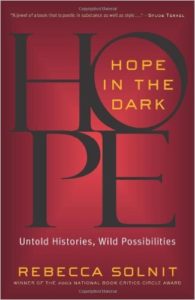
Hope in the Dark: Untold Histories, Wild Possibilities
Rebecca Solnit
Nation Books, 2005
Paperback: 192 pages
We need this book now. The author is extraordinarily clear, historically grounded, well informed of events around the globe, and dedicated to what is most true, courageous and important for human beings.
Ms. Solnit does not get distracted by memes, nor does she fall into cynical doomsday thinking—even when that’s what so many other people are doing. She refuses to join in conversations about how awful, terrible, worse-than-ever the world is. Instead she reminds us that systemic changes always start with small actions that are only affecting things behind the scenes, underground, where no one knows to look. Eventually the change seems inevitable and immediate, even though it has been building in this subterranean fashion for quite a long time.
Consequently she is both inspiring and realistic with a deep, abiding faith in goodness and justice. She brings an adult voice that many of us who are feeling powerless right now can really use to find our way back to our own sense of agency.
She reminds us that we are not only listeners/receptors of cultural/political/economic stories but are quite capable of generating our own. We are never, then, powerless corks floating in the stream of someone else’s making.
A short, powerful book, readily accessible and indispensable for guiding us through our current dark times.
— James Flaherty
News & Updates
New Course for Organizations
Masterful Conversations with James Flaherty
For most leaders, an average day is spent in conversation. You don’t have to be an especially seasoned leader to know that these conversations determine the way forward for the folks who are having them—and the organization as a whole.
What is not as widely recognized, though, is that there are elements of conversations that can profoundly determine our agency in how things move forward and that we can master. Among what is required is having a body that’s present, centered and sensitively responsive; understanding how you uniquely interpret so you quickly adjust your speaking and listening to correct for blind spots and fixed views; and tuning into how your conversational partners are listening in a given moment so you can shift your speaking accordingly.
In this course, James Flaherty brings his learning from Fernando Flores, which he has humanized, evolved and matured over the years, in addition to his years of experience inside organizations observing how short- and long-term success of a company is determined by the conversations that happen in it. This material is seminal and not widely accessible.
If you work in an organization, this 3-day workshop and its optional follow-on teleclass is a chance to build your team’s ability to flourish through more elegant, more effective communication by cultivating resourcefulness in a rigorous and supportive environment. Learn more.
See you at Wisdom 2.0?
This year New Ventures West is sponsoring the first-ever Integration Lounge at Wisdom 2.0, taking place this year at the Palace of Fine Arts in San Francisco. The Lounge will host a program of workshops by presenters including Ann Weiser Cornell, Sandra Maitri, John Prendergast, Meg Levie, Beatrice Chestnut, Kathrin O’Sullivan, and our own senior faculty. See our schedule here by clicking on the “Integration Lounge” tab in the calendar.
We’ll also be offering free half-hour coaching sessions to conference-goers as we’ve done in past years; however, this year there are designated cozy coaching cubbies right inside the Lounge. There will be tea and snacks for Lounge visitors.
If you are going to be at the conference, stop in to say hi and/or attend a workshop. If you are a certified grad and would like to volunteer free coaching, email Sahar or call us at 415.221.4618.
We’re coming back to Boston!
Sarita Chawla will be leading her popular course Thwarting the Inner Critic in Boston on June 8-9. Sarita recently re-designed the course, so even if you’ve taken it previously this is a new opportunity to trounce your pesky superego. This class is open to anyone—you don’t have to be a coach or even interested in coaching, so spread the word to clients and loved ones in the area who might benefit.
For those who are curious about Integral Coaching, our two-day foundational course Coaching To Excellence comes to Boston in October.
Still seeking support in SF
We are looking for a Logistics Assistant to provide classroom support at the Lauren Coaching Center. PCC grads and students are preferred but not required. Your role would be to create and maintain a warm, safe and inviting space for the students in our many classes by way of classroom setup, preparing coffee and snacks, refreshing and cleaning during breaks, and shopping for supplies. The job pays $25/hour, or $50/hour credit towards future NVW classes (or a combination if you like). Those interested should email [email protected].
CTE in Mexico
Congratulations to faculty member Cynthia Luna for leading the latest Coaching To Excellence in Mexico City in November. We’re thrilled at the ever-growing number of Spanish-speaking students and graduates in the Integral Coaching community. It ensures that this work is available to more who need it. ¡Felicitationes a todos!
Graduate News
Letter from the Graduate Directors
Dear graduates,
Are you actively coaching right now? Is your coaching practice as robust as you envisioned upon graduating the PCC?
If not, why?
Chances are that shortly after certification—once you exited the ‘greenhouse’ of growth and support that was your PCC cohort—your ideas about yourself were no longer challenged daily. Perhaps your resolve dissipated, or your desire to contribute changed shape.
It’s also possible that your clients became more challenging, cases more complex. Though you’ve likely done some further training or deepened a practice you picked up during your PCC year, it does not inquire as deeply into the fullness of human life as our methodology is designed to do.
This is why it is important to recognize that coach training is a multi-year endeavor. Becoming an effective coach requires that we are constantly encountering ourselves and our work in fresh ways. The PCC touched on lots of important aspects of human transformation, each of which warrant vastly deeper study. Towards Mastery is a chance to do this—and to keep our own development edges alive, increase the resources available in our work with clients, and ensure our call to service remains vibrant.
In the spirit of making this opportunity more accessible, the upcoming Towards Mastery course in San Francisco is changing format to include two in-person sessions and one session online. Feel free to contact us any time to talk more about deepening your Integral Coach education.
Love,


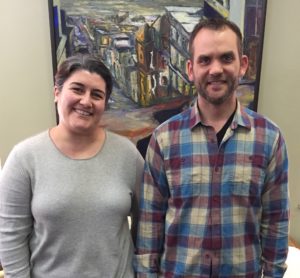
Adam Klein and Sahar Azarabadi
Grad News
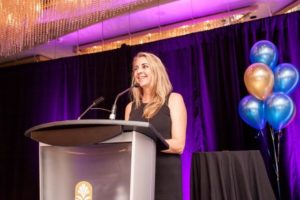
Tana Heminsley (2007) received the 2016 ICF Vancouver Charter Chapter Coach Impact Award. This is the highest award category in British Columbia for coaching excellence at an individual partnership level. Well done Tana!
Congratulations and welcome to our new graduates!
Sudeep Balain, Mill Valley, CA, USA
Priscilla Boucher, Vancouver, BC, Canada
Marie-Liesse Calmejane, Singapore
Fred Cheng, Shanghai, China
Robert Chua Teck Chew, Singapore
Michael Cohen, Salt Lake City, UT, USA
Lieve de Lint, Oakland, CA, USA
Ying Gong, Foster City, CA, USA
Cyndi Gueswel, Loveland, CO, USA
Carlos Homedes, Lake Oswego, OR, USA
Birgit Hueglin-Wood, Walnut Creek, CA, USA
Claire Jung, Hong Kong Island, Hong Kong
Sandy Lozito, San Jose, CA, USA
Maria Lucero Soler Lopez, Bogotá, Colombia
Georgia Manuselis, El Cerrito, CA, USA
Amy March, Auburn, CA, USA
Jonathan Marshall, Singapore
Peter Mathies, Tokyo, Japan
Shana Montesol Johnson, Manila, Philippines
Brian Newman, Wan Chai, Hong Kong
Venkatanarayanan Ramasamy, Chennai, India
Katherine Seaver, Chapel Hill, NC, USA
Allan Silva, Oakland, CA, USA
Helen Stocklin-Enright, Portland, OR, USA
Eadren Tan, Singapore
Michelle Weston, San Francisco, CA, USA
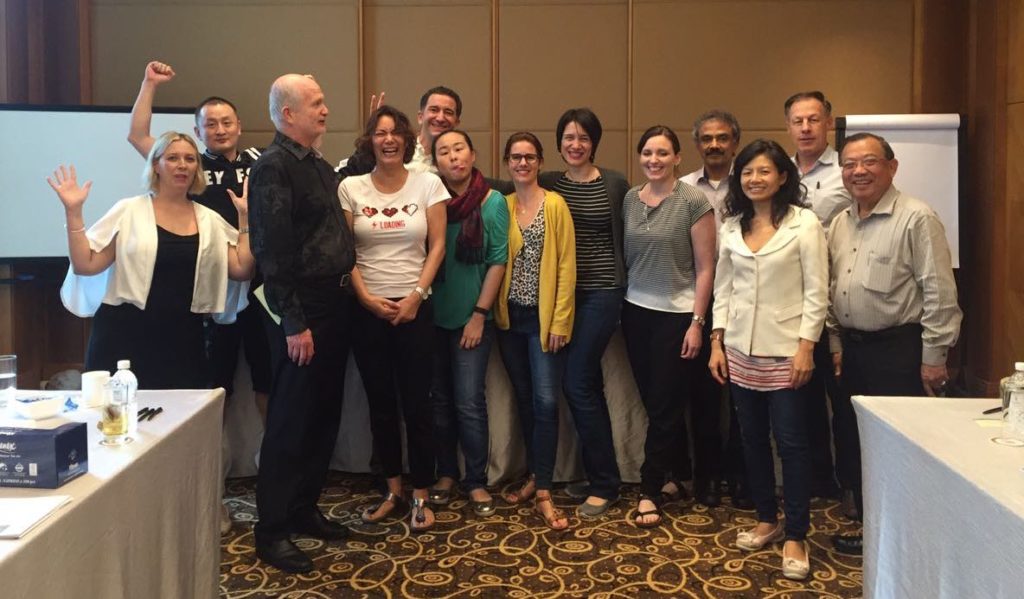
The students and faculty of Singapore “K” celebrate after their certification in November. Well done, friends!