Q4 2025 EDITION
Making Room for Contradiction
I’m really interested in the nitty gritty of our everyday life: like waking up in the morning and getting ourselves ready, getting kids ready if we have kids, taking care of our pets, going to work, interacting with our colleagues, being in an interaction with our bosses, navigating these bodies that, I don’t know if you’ve noticed, but they keep changing.
Featured Article • Making Room for Contradiction
Making Room for Contradiction
I’m really interested in the nitty gritty of our everyday life: like waking up in the morning and getting ourselves ready, getting kids ready if we have kids, taking care of our pets, going to work, interacting with our colleagues, being in an interaction with our bosses, navigating these bodies that, I don’t know if you’ve noticed, but they keep changing. One thing works one day and then the next day it’s like, nope, that doesn’t work anymore. So you got to change it up.
One dimension I’m turning toward in this article is how I seemingly am a walking contradiction. Do you experience this in any way, dear reader? A time when you behaved counter to what you see as your ‘normal’ behavior?
I’ll share a couple examples, and then will invite you to examine for yourself and see what contradictions you notice. We’ll then turn to an alternative possibility to live within contradictions.
Contradictions, the way that we can be one way and then another way that are seemingly opposite to each other – all within the span of a single day or hour. My first example, I’m a really go with the flow kind of person. Whatever people want to do, I’m happy to do it. It is the Enneagram Seven nature I have of, ‘it’s all good, everything’s fine, we can do whatever.’ I’m enthusiastic about everything. Except when I’m not. A good friend of mine several years ago said, “Why are you so controlling? You like to control everything.” She noticed the other side of the coin: control. As long as it doesn’t deal with this or this, I will go with the flow, but otherwise I’m going to be kind of controlling to engineer what I prefer to happen.
Another example, I love being around people and then suddenly I feel, oh my god, people, why are you so annoying? Can I just be alone now? Please. And it’s not mood dependent. I could be in a really happy mood and want to be alone and I could be in a really happy mood and want to be around people.
So which is it?
Herein is one of the difficulties I notice – we wish to be consistent, coherent, and adhere to a story we have of who we are (or are supposed to be). This can have us try to understand these contradictions and work to reconcile them. My sense is there are lots of ways to make sense of this. You might be noodling on some yourself. This is my shadow and there’s shadow work here, or these are inherited patterns from my childhood and sometimes I’m not affected by these patterns and/or these are internalized parts. At one point it’s one part of me and another time it’s another part.
Those are all very valuable and helpful ways of orienting to this inquiry of contradictions and different ways we can show up. I’m inviting us to explore one not often centered in these conversations. One that points to a different understanding of ‘self’—and with it, a distinct kind of freedom.
We are systems constantly forming in each moment, as the moment arises. We are created a-new, freshly in every breath.
There is the possibility for us to organize as the moment needs, when we open ourselves to be organized in that way. This is sort of post-shadow work or post-dissolving patterns or a different way of coming at this, which is if we allow ourselves to not have to be so coherent and congruent all the time, what does that allow for? If we stop the project of trying to have everything make sense, including ourselves, what then becomes possible?
We’re used to knowing ourselves as something consistent—this body that shows up mostly the same every day (though, as I said, it keeps changing). But if we hold that and then dissolve or surrender or let go of this separate sense of self or this sense of self that says, “this is me”, then what becomes possible? For example, as you read these words and attune to how you are now being formed in this breath – what do you notice? What about your sense-of-self is shifting?
Here’s what I find interesting: the very idea of ‘contradiction’ assumes there’s a consistent way I’m supposed to be. If I’m not that way, something’s off. But what if there’s no baseline? Another possibility is life is living me and life organizes in all kinds of ways based on a myriad of factors. In this moment, given the ingredients of personality, patterns, physiology, other people, the unseen and unknown, this is the soup that can be made. Why wouldn’t life be allowed to organize within me and as I respond to the world as each moment shows up?
This organizing doesn’t happen in isolation. We’re always in relationship—in a field. Sometimes the moment calls for remembering a preference. Sometimes it calls for forgetting. Neither is the ‘right’ way. The room we’re making is for both.
Take a moment if something’s surfacing for you. What contradictions do you see for yourself? What does this way of orienting open for you? What becomes possible?
A Practice for Making Room
Reorganizing in the moment requires space. We can’t form freshly if we’re already holding ourselves in a fixed shape. Here’s a simple practice:
Find a posture that lets you feel your dignity—seated or standing. Take a few breaths without trying to change anything.
As thoughts arise, let them go. As sensations arise, let them go. As emotions surface, let them go. You’re not pushing anything away—just not gripping.
Now notice: where do you find yourself when you release? Don’t direct your attention anywhere specific. Simply follow where the letting go takes you.
You might notice places you don’t usually allow yourself to go—spaciousness behind you, or a stillness beneath the mental chatter. Go there.
This isn’t about achieving a state. It’s about creating room—room for whatever wants to organize in this moment. The contradictions don’t need to resolve. They need space to coexist. When we stop holding ourselves together so tightly, we discover we were already large enough to contain it all.
What this allows
When we make room, something becomes possible that wasn’t before: we can learn.
Neuroscientist Mark Solms, in his book Hidden Spring, describes how adults learn differently than children. We don’t absorb information freely—we operate from a built-in model of how the world works, including how we work. That model only updates when we register an “error”—something that doesn’t fit.
The contradictions we’ve been exploring are errors in this sense. They don’t match the story we hold about ourselves. Normally, we dismiss them: “That was just an off day,” or “That’s not really me.” The model stays intact. Nothing changes.
But when we make room—when we stay present to the contradiction rather than explaining it away—something can shift. There’s a micro-moment, often barely perceptible, when a new response flickers before the old pattern reasserts itself. That flicker is the opening.
Think of it as a plant trying to grow. Attention is the sunshine. When we bring awareness to these moments of possibility rather than dismissing them, we give them what they need to take root.
We’re not trying to become more consistent. We’re learning to be more responsive—a living answer to each moment as it arrives.
Widening Circles
The poet Rilke wrote:
I live my life in widening circles that reach out across the world. I may not complete this last one, but I give myself to it.
I used to read this as expansion—becoming larger, reaching further. Now I wonder if the widening is something else: our tight sense of self slowly dissolving into what was already true. We were never as small as we thought. The contradictions were evidence of our vastness all along.
Someone in a recent conversation offered this image: “It’s as if we’re in a kaleidoscope.” Constantly shifting. Refracting light differently with each turn. No single pattern is the real one.
Making room for contradiction isn’t about becoming more coherent. It’s about letting ourselves be large enough to hold what’s already here—the controlled flow, the love of people and solitude, all of it turning and catching the light.
We are still being made.
With love,
Adam Klein
NVW Managing Partner & Senior Faculty

Practice • Making Room
A Practice for Making Room
Reorganizing in the moment requires space. We can’t form freshly if we’re already holding ourselves in a fixed shape. Here’s a simple practice:
Find a posture that lets you feel your dignity—seated or standing. Take a few breaths without trying to change anything.
As thoughts arise, let them go. As sensations arise, let them go. As emotions surface, let them go. You’re not pushing anything away—just not gripping.
Now notice: where do you find yourself when you release? Don’t direct your attention anywhere specific. Simply follow where the letting go takes you.
You might notice places you don’t usually allow yourself to go—spaciousness behind you, or a stillness beneath the mental chatter. Go there.
This isn’t about achieving a state. It’s about creating room—room for whatever wants to organize in this moment. The contradictions don’t need to resolve. They need space to coexist. When we stop holding ourselves together so tightly, we discover we were already large enough to contain it all.
Poetry & Reading
Poem of the Quarter
As I Walked Out One Evening
by W.H. Auden
As I walked out one evening,
Walking down Bristol Street,
The crowds upon the pavement
Were fields of harvest wheat.
And down by the brimming river
I heard a lover sing
Under an arch of the railway:
‘Love has no ending.
‘I’ll love you, dear, I’ll love you
Till China and Africa meet,
And the river jumps over the mountain
And the salmon sing in the street,
‘I’ll love you till the ocean
Is folded and hung up to dry
And the seven stars go squawking
Like geese about the sky.
‘The years shall run like rabbits,
For in my arms I hold
The Flower of the Ages,
And the first love of the world.’
But all the clocks in the city
Began to whirr and chime:
‘O let not Time deceive you,
You cannot conquer Time.
‘In the burrows of the Nightmare
Where Justice naked is,
Time watches from the shadow
And coughs when you would kiss.
‘In headaches and in worry
Vaguely life leaks away,
And Time will have his fancy
To-morrow or to-day.
‘Into many a green valley
Drifts the appalling snow;
Time breaks the threaded dances
And the diver’s brilliant bow.
‘O plunge your hands in water,
Plunge them in up to the wrist;
Stare, stare in the basin
And wonder what you’ve missed.
‘The glacier knocks in the cupboard,
The desert sighs in the bed,
And the crack in the tea-cup opens
A lane to the land of the dead.
‘Where the beggars raffle the banknotes
And the Giant is enchanting to Jack,
And the Lily-white Boy is a Roarer,
And Jill goes down on her back.
‘O look, look in the mirror,
O look in your distress:
Life remains a blessing
Although you cannot bless.
‘O stand, stand at the window
As the tears scald and start;
You shall love your crooked neighbour
With your crooked heart.’
It was late, late in the evening,
The lovers they were gone;
The clocks had ceased their chiming,
And the deep river ran on.

Book of the Quarter
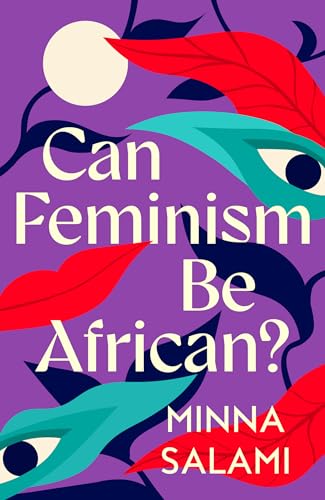
Can Feminism Be African?
by Minna Salami
What happens when we consider Africa through a feminist lens and feminism through an African one? And what does it mean to center selfhood in this journey?
In this shining, wide-ranging inquiry, Minna Salami explores these questions through an unhesitating and incisive vision of African feminist political philosophy.
Drawing from feminist thought, postcolonial theory, historical insights, and African knowledge systems, Salami combines personal reflection with cultural criticism to offer a vivid and cohesive discussion about power, identity, patriarchy, imagination, and the human condition. Grounded in Africa’s enduring visions of agency and autonomy, Can Feminism Be African? opens new paths for rethinking the narratives that shape our world.
This is a timely and thought-provoking read, calling us to rethink the past, present, and future through new perspectives.
News & Updates
The (un)Summit (NVW)
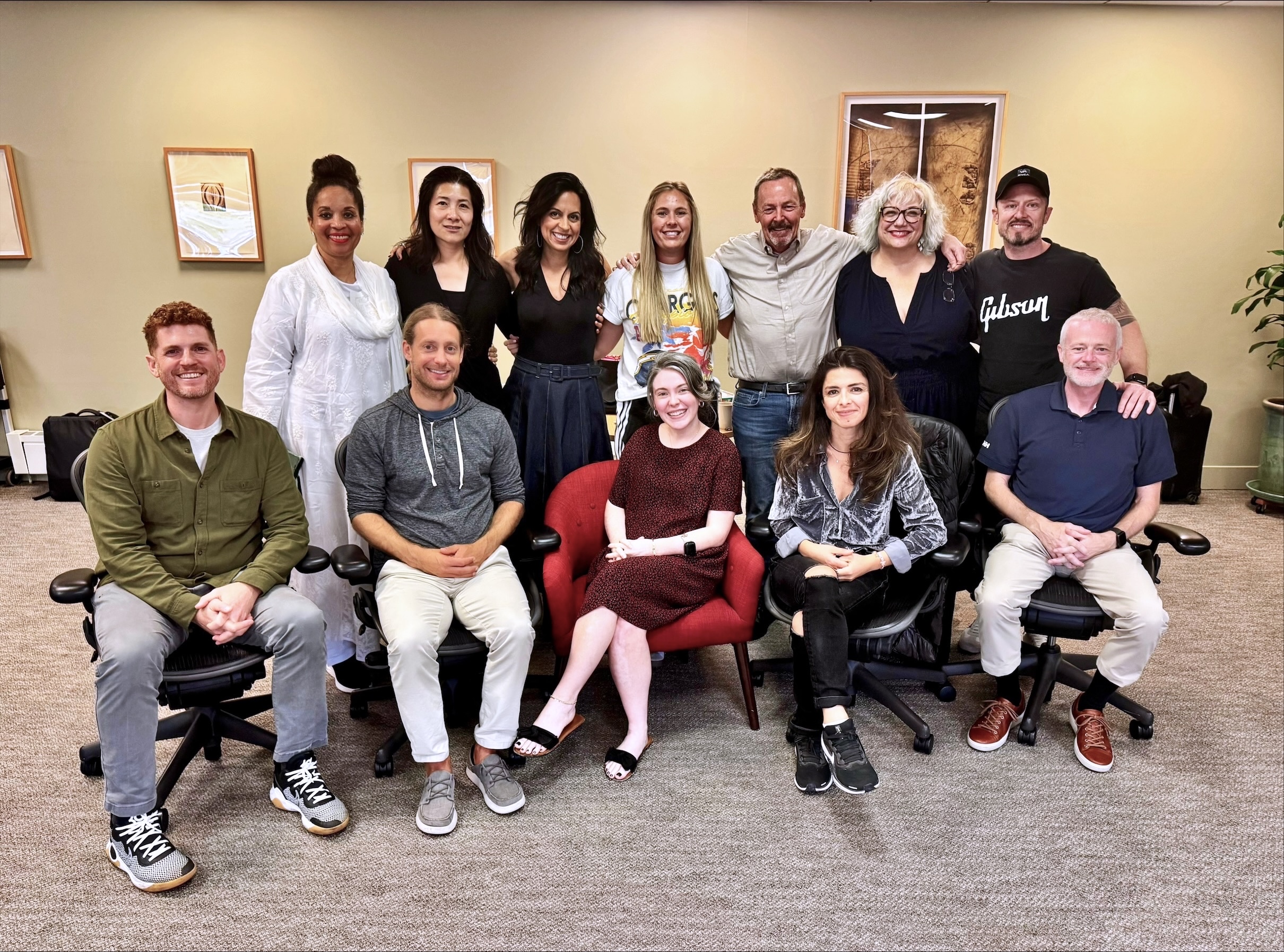
Our first-ever (un)Summit: Where Wisdom Meets Action, led by Sahar Azarabadi and Adam Klein, brought together coaches, leaders, and seekers from around the world for five days of genuine connection and presence. We encountered new and old friends and, as a collective, experienced a holding and thought-provoking space led by fascinating luminaries.
People showed up ready to be truly seen and deeply listened to, creating a quality of engagement that was remarkable. The focus was on integration and bringing wisdom into our bodies, relationships, and daily lives in ways that create real transformation. We can’t wait to gather again and engage with our global community in the near future.

Marketing Your Coaching Business (NVW)
If you’ve been wondering how to build a coaching practice that feels authentic to who you are, Winn Clark’s Marketing Your Coaching Business program might be just what you need.
Over nine weeks, you’ll get clear on your ideal clients, explore strategies for your business, and discover ways to connect with the people you’re meant to serve. It’s a warm, interactive space where you’ll develop the practices and relationships that support a thriving coaching business.
Open to everyone—whether you’re just starting out or looking to grow or refresh what you’ve already built!

Thirdspace (UK)
Our UK Partner, Thirdspace, held their annual late summer PCC picnic in September, and they’re excited to announce their first in-person retreat for all alumni and current students coming up in March 2026. Justin is teaching some wonderful study days this winter, and the podcast has reached an incredible milestone—423 episodes of Turning Towards Life.
Thirdspace has also launched Turning Towards Life Live, a monthly online group where participants practice together, and another season is opening up in the new year for others to join.
NVW Communications
When We Stay: What the (un)Summit Revealed About Our Hunger for Real Connection

One of the most significant moments we share as humans are the exchanges that support, change, and build us. Little by little, words—like silk threads—weave within us, integrating into our being. Us. Me. You.
Conversations are the triggers we need to remember who we are. It’s not a painless journey, but a necessary one of coming home to yourself. And the coming home isn’t meant to be done alone.
This is the work we do at New Ventures West. We create spaces where people learn how to be part of conversations that impact others while integrating the silk threads of growth into their own lives—whether they’re aspiring to be a coach, a leader, a parent, or a better friend.
This October, we held our first-ever virtual (un)Summit: Where Wisdom Meets Action, leading conversations with luminaries who are creating a better, less chaotic world through language, wisdom, and deep connection.
Together, we explored what it means to be human in these times. We were encouraged to practice staying in relationship even when we disagree. Not staying silent. Not abandoning our truths. But staying.
In our culture, we’ve become skilled at leaving. We leave conversations when they get uncomfortable. We curate our feeds to reflect only what we already believe. It’s efficient, tidy, and carves us into smaller pieces.
What we invite people to do is to hold space for disagreement, for the full messy complexity of being human alongside others who see the world through completely different eyes.
This isn’t about being nice. It’s about being present. Holding our bodies in the face of discomfort.
It means letting someone’s perspective land in you even if you don’t agree. It means choosing curiosity over certainty, even when certainty feels safer. The courage this takes cannot be overstated.
We are living through profound fragmentation. We’re sorting ourselves into camps and calling it community. We’re building walls and calling it boundaries. We’re choosing certainty over connection because connection requires too much of us.
But beneath the defensiveness, there’s a deeper current. People are hungry for the experience of being truly seen and still belonging. For the possibility that transformation doesn’t require perfection, just presence.
The (un)Summit offered something more hopeful: the experience of integration. Of bringing wisdom into the body, into relationships, into daily life. Of discovering that we don’t have to wait until we’re “ready” to show up fully.
When people feel genuinely held, something loosens. This is what sacred containers do—spaces where all aspects of our experience can exist without judgment, where we practice being present at the level of thought, body, and emotion all at once.
In these spaces, people begin to believe that transformation is possible now. They see that their struggles aren’t signs of brokenness but invitations to growth. They remember they’re not alone. And then they carry that remembering forward.
This is the ripple we’re after: the quiet, persistent practice of choosing presence over performance, connection over certainty, staying over leaving.
Here’s what I’m holding: hope.
Not the naive kind, but the grounded kind that says, This is possible. We did it. We can do it again.
It starts with a choice, your choice, to show up more honestly in the next conversation. To stay present when things get uncomfortable. To offer your rawness as an invitation for others to do the same.
We’re here, at New Ventures West, creating these containers for a reason. We believe the world needs more thoughtful, attuned, courageous humans. And we’ve spent forty years learning how to help people become them—not by bypassing the mess, but by walking directly into it with skill, compassion, and presence.
If you felt something stir as you read this—a recognition, a longing, a quiet “yes”—perhaps that’s worth paying attention to.
The question isn’t whether you’re ready. The question is whether you’re willing to begin.
With love and hope for beginnings, always.
Karen Kininsberg (she/her)
NVW Director of Communications

Graduate Congratulations
Welcome New Graduates!
PCC “E” – Aug 24, 2025
Amanda Short, Concord, CA
Brian Lim, San Francisco, CA
Camila Gomez Willis, Santa Cruz, CA
JP (Chimi) Tornow, Meridian, ID
Deanna Froeber, Fuquay Varina, NC
Douglas Raymond, Seattle, WA
Elvie Gee, Princeton, NJ
Grant Delaware, Scarborough, Maine
Jeni Arbuckle, Denver, CO
Jenny Tornow, Austin, TX
Jessica Gilbert, New York, NY
Johanna Silver, Boulder, CO
Lori Vessali, Dubai, UAE
Maya Kanehara, Reno, NV
Natasha Tasson, Chesterfield, MO
Rajiv Chopra, Venice, CA
Sahil Sondhi, Mexico City, MX
PCC “F” – September 2025
Adam Motenko, Boston, MA
Alan Daly, San Jose, CA
Aubrie Nelson, Garland, TX
Benjamin Anderson, San Francisco, CA
Gemma Naghipour, Burlingame, CA
Gregory Lennon, Sagamore Beach, MA
Julia Propp (Osborne), New Braunfels, TX
Marie-Flore Johnson, McLean, VA
Mark Savage, Columbia, MO
Mary McGrath, San Francisco, CA
Sevcan Saffen, Albany, CA
PCC “D” (London) – Nov. 2025
Caroline Wong
PCC “G” – Nov 23, 2025
Anne Pilson, Wilmington, DE
Chris Wilson, San Francisco, CA
Emmy Negrin, Portland, OR
Garret Moniz, Boston, MA
James (Patrick) O’Hara, Brooklyn, NY
Jean Pierre Langlois, Nashville, TN
Karin McClelland, Arvada, CO
Katherine de Haas, San Francisco, CA
Michael Kassis, Loma Linda, CA
Molly Siemers, San Francisco, CA
Rebecca Drejet, Seattle, WA
Ryan Windsor, Davis, CA
Sara Turner, Smyrna, GA
Tess Avalos, Auburn, CA
Tracy Marshburn, Raleigh, NC
Tyra Mariani, Seattle, WA
Recent Blog Posts