Spring 2026
Grounded, Vital, Becoming
Nineteenth-century Danish philosopher, Søren Kierkegaard, defined four levels of commitment. His claim is that who we are and who we are becoming is shaped by our commitments. And without any Level 4 commitments, life is devoid of meaning.
Featured Article • What Gardens Know About Becoming
What Gardens Know About Becoming: On Commitment, Meaning, and the Merits of Rooting
Spring is one of my favorite seasons for many reasons. One is that it’s the beginning of the gardening season which includes clearing, cleaning, soil preparation, planning, and ultimately planting. Said another way, there is much attention on creating supportive conditions, i.e. tending to the soil, assessing spacing and layout and considering other environmental factors so that once planted, the seeds and seedlings might flourish.
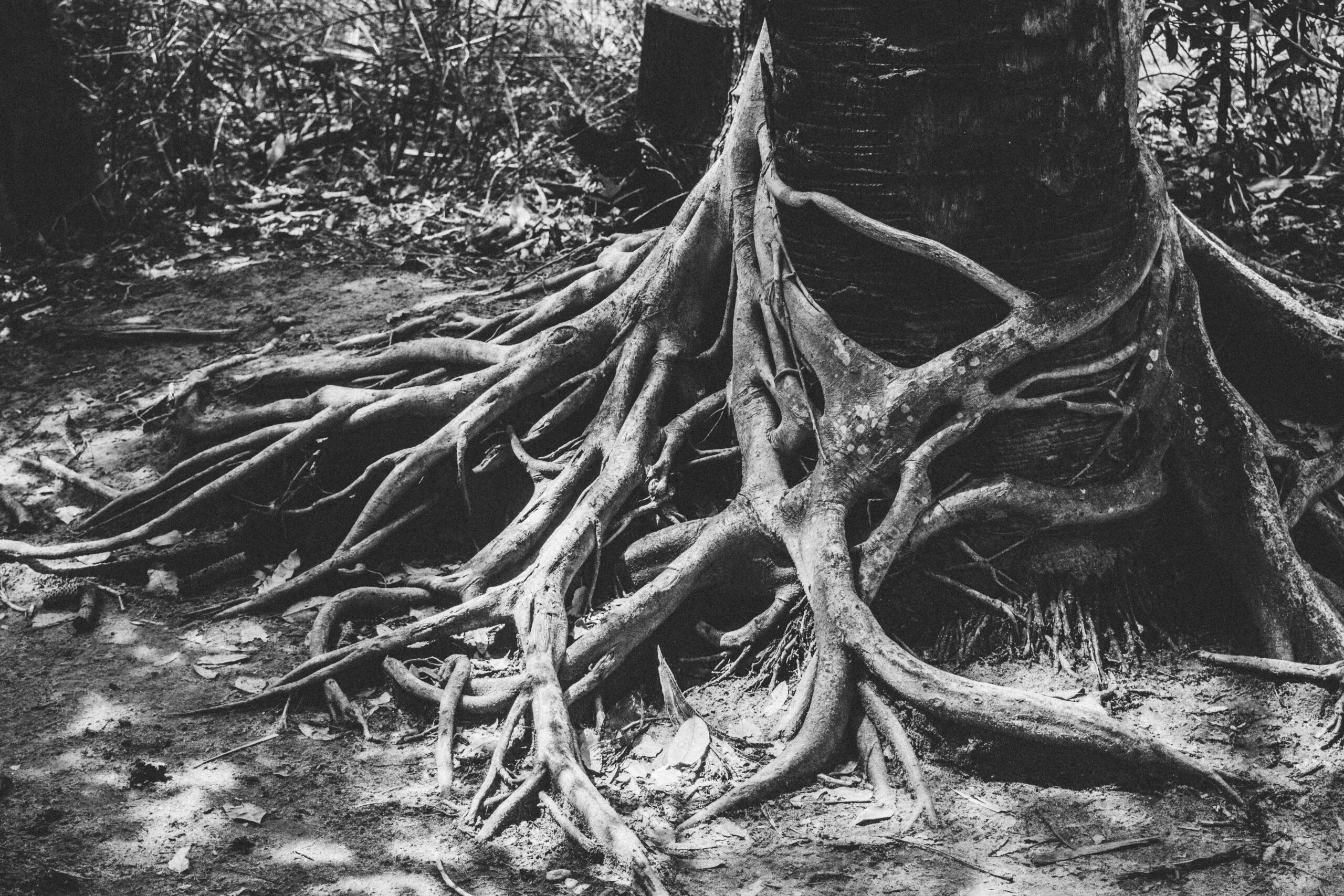
When clearing and cleaning, I’m often quite taken with the roots and root systems that are the only remaining proof of the annual plants that once thrived in that location. No two root systems are the same – some run deep, while others go vast and broad. Some send one primary tap root deep into the soil that stubbornly refuses to relinquish its duties even when the plant above is long gone, while others seem to have a more collaborative approach to oversight with a complex network of fibrous root branches.

What they share, however, is that the roots are what enable nourishment, foster resilience to support plant structure in the face of shifting weather, and connection to the “wood wide web” – the wider mycelial network that facilitates information exchange, resource sharing, environmental stability, and soil structure. I could go on and on about gardening: the miracle of root systems, and how what happens below ground and above ground are mysteriously and inextricably linked, and so exquisitely inform each other. And you might be wondering what any of this has to do with coaching, development, and our becoming. If you’ve made it this far, I invite you to read on dear reader…
Over the last year, I’ve noticed clients and prospective students of the Professional Coaching Course increasingly sharing a deep desire to live a life imbued with meaning and a longing to contribute; while simultaneously feeling utterly unmoored with significantly diminished capacity. These experiences are fueled by a world that is rapidly shifting: both hyper-connected and profoundly disconnected, and where there is much divisiveness and uncertainty. For many, the obvious response to these conditions is to design life to be more flexible and adaptable so there is more freedom to respond to the inevitable unpredictability of life. Attempts to achieve this level of flexibility are often attained by removing, reducing, or rejecting commitments. These attempts are favored by a dominant culture that rewards optionality and optimization. Keep your options open. Don’t close any doors. Stay flexible. Find the best option (i.e. most effective or efficient).
But how does reducing commitments address the feeling of being unmoored or imbue life with meaning? This would be akin to the plant waiting to grow secondary and tertiary roots and root hairs only when the plant has already fully matured and started ‘bearing fruit’. But of course, we know that maturation and fruiting wouldn’t be possible in the absence of further rooting. Perhaps feeling unmoored is not a sign that you haven’t found the right or best path. It might be a sign that you haven’t committed to any path.
Nineteenth-century Danish philosopher, Søren Kierkegaard, defined four levels of commitment. His claim is that who we are and who we are becoming is shaped by our commitments. And without any Level 4 commitments, life is devoid of meaning. As you read, I invite you to sense into the rooting that is called for at each level.

- Level 1: “I’ll do it as long as I like it” (about immediate gratification and pleasure)
- Level 2: “I’ll do it until something better comes along” (about personal choice)
- Level 3: “I’m willing to give something up for this or until it doesn’t work out” (commitment with an exit strategy)
- Level 4: “I’m committed no matter what” (what Parker Palmer describes as ‘This is something I can’t not do, for reasons I’m unable to explain to anyone else and don’t fully understand myself but that are nonetheless compelling.’)
Don’t get me wrong. The ‘flexibility approach’ has its merits, it’s just incomplete and often misunderstood in our dominant cultural context. It treats commitment as an obstacle or barrier to flexibility and freedom. And what gets missed is that commitment is the condition for a deeper kind of freedom.
Here is what Kierkegaard understood that most dominant cultures organized around optimization and productivity miss: you don’t wait for optimal conditions and then commit. It’s the committing, the unexplainable thing you can’t not do, the deep and robust rooting, that imbues life with meaning, summons contribution and transmutes unmooredness to a grounded, vital becoming. What is the root system that is shaping you and your becoming?
Take up this quarter’s practice to learn more.
With love,
Sahar Azarabadi (she/her)
Managing Partner & Senior Faculty
New Ventures West

Practice • Mapping & Noticing
Rooting & Commitments

This practice is an invitation to take some time and reflect on where you are actually rooted — and where you might be hovering above the soil, waiting for better conditions before you commit. Set aside 20–30 quiet minutes. Have a journal or paper nearby.
Part 1: Mapping
Begin by listing the major areas of concern — money, body, relationships, work or vocation, family, creative life, community, spiritual, contribution and any others that feel significant to you. For each area, what commitments are you living: spoken or unspoken?
Which level would you place each commitment?
- Level 1 — I’m in it as long as I like it
- Level 2 — I’m in it unless something better comes along
- Level 3 — I’m willing to give something up for it / I’m in it until it stops working
- Level 4 — I’m in it, no matter what
Part 2: Notice the Roots
Now look at your map as a whole. Reflect on the following questions:
- Where are your deepest roots? What is / are your Level 4 commitment(s)? (Note on Level 4 – there is usually one, maybe two)
- Are there areas of your life where you are waiting — for better conditions, for more certainty, for someone else to go first?
- What possibility(ies) has your current rooting pattern closed? Opened?
Poetry & Reading
Poem of the Quarter
Everything Falls Away
by Parker J. Palmer
There’s a thread you follow. It goes among things that change. But it doesn’t change.
– William Stafford
Sooner or later, everything falls away.
You, the work you’ve done, your successes,
large and small, your failures, too. Those
moments when you were light, alongside
the times you became one with the night.
The friends, the people you loved
who loved you, those who might have wished
you ill, none of this is forever. All of it is
soon to go, or going, or long gone.
Everything falls away, except the thread
you’ve followed, unknowing, all along.
The thread that strings together all you’ve
been and done, the thread you didn’t know
you were tracking until, toward the end,
you see that the tread is what stays
as everything else falls away.
Follow that thread as far as you can and
you’ll find that it does not end, but weaves
into the unimaginable vastness of life. Your
life never was the solo turn it seemed to be.
It was always part of the great weave of
nature and humanity, an immensity we
come to know only as we follow our own
small threads to the place where they
merge with the boundless whole.
Each of our threads runs its course, then
joins in life together. This magnificent tapestry –
this masterpiece in which we live forever.

Book of the Quarter
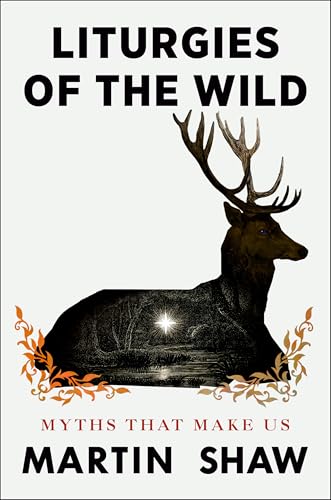
Liturgies of the Wild:
by Martin Shaw
In the introduction, Martin Shaw asks, “How do you make a human being? And what is that?” Shaw argues that stories matter. Culture gets built on them. And that we live in a myth-impoverished age. Drawing on the “ancient technologies” of myths and initiatory rites, he provides a road to wholeness, maturity, and connection — teaching us to read a myth the way it wants to be read. This book offers something rare: a framework for understanding myth not as cultural artifact but as initiatory technology. Shaw suggests that we are “wandering initiatory times without an initiatory language” — and his response is not a system or a method but a collection of stories and practices to help us become, as he puts it, real, grown human beings. Perhaps at its core, this weave of folktales and stories is an initiation in and of itself. And a reminder that “deep down this world is mysterious, yet approachable, and that a story well-loved can hold both the everyday and the supremely luminous in its hand.”
Book reviewed by Sahar Azarabadi
News & Updates

Advanced Somatics
Thriving and Responding from Embodied Presence
If you’ve experienced the transformational nature of somatic work through glimpses, reading, or more profound shifts, we invite you to deepen into what’s possible through greater embodiment with our Advanced Somatics course.
Led by Sahar Azarabadi and Adam Klein, this newly designed intensive explores the somatic thread of Integral Coaching: awakening what becomes available when we more deeply inhabit our bodies and release them from historical shaping. Over two days, you’ll develop awareness of your present state, open your body to access essential qualities, attune to subtle energetic patterns, and expand your spectrum of embodied responses.
This course welcomes both practicing coaches and anyone looking to bring greater embodiment to their everyday life. Your body is welcome here.
May 15–16 | 9am–4pm PT | In-person, San Francisco
Registration ends April 17.
Integral Coaching is Three-Dimensional Coaching
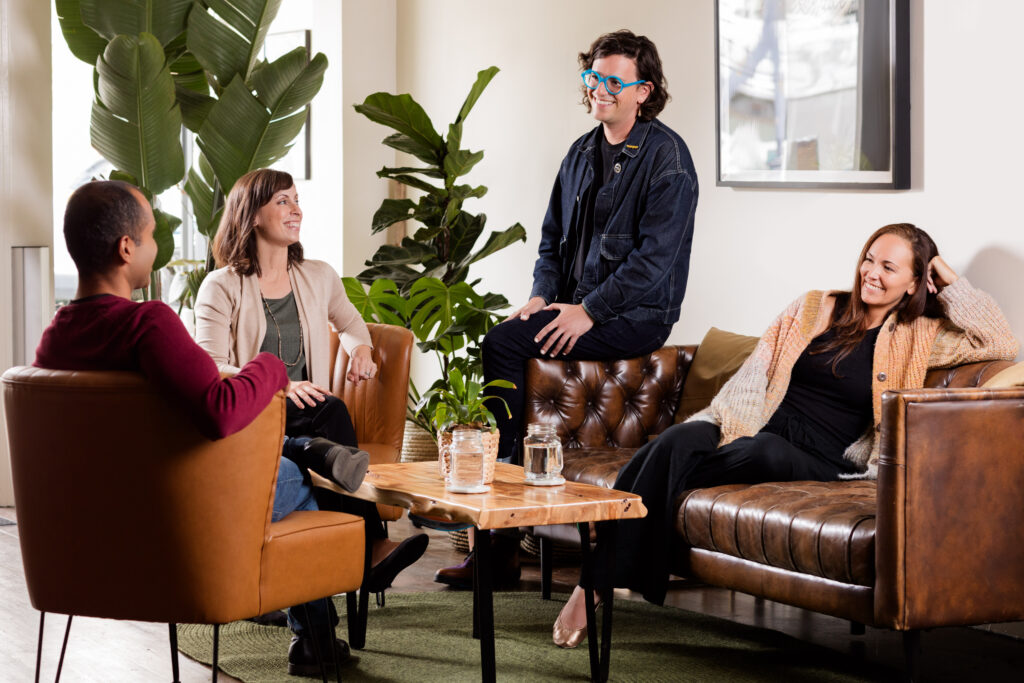
Most coach training teaches techniques. We develop you as the instrument.
Here’s what that actually means. While most programs train your thinking mind with frameworks and questions, we develop three dimensions that most coaching ignores entirely.
Dimension 1: Your Full Inner Capacity. You learn to sense what’s happening in your body moment-to-moment. You expand your emotional range so you can stay present with grief, rage, or fear without collapsing. Your body becomes a guidance system you can trust.
Dimension 2: Your Relational Presence. You learn to feel and work with what’s happening in the space between you and another person. You track the unspoken dynamics. You invite people to show up fully through your presence, not just your words. The relationship itself becomes transformational.
Dimension 3: Your Wider Perception. You sense what’s happening in the larger field: organizational dynamics, cultural patterns, what’s emerging in real time. You help people see patterns they couldn’t see from inside their own role.
When you develop all three, you’re not analyzing from your head alone. You’re sensing through your body, feeling through relationship, and perceiving through the larger field simultaneously. That’s what creates transformation that lasts.
Thirdspace (UK)
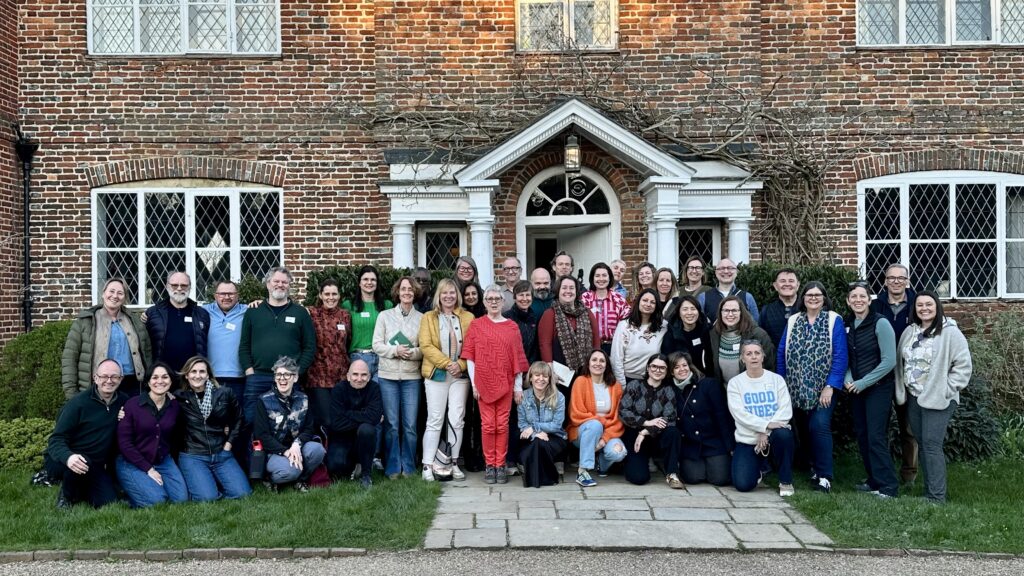
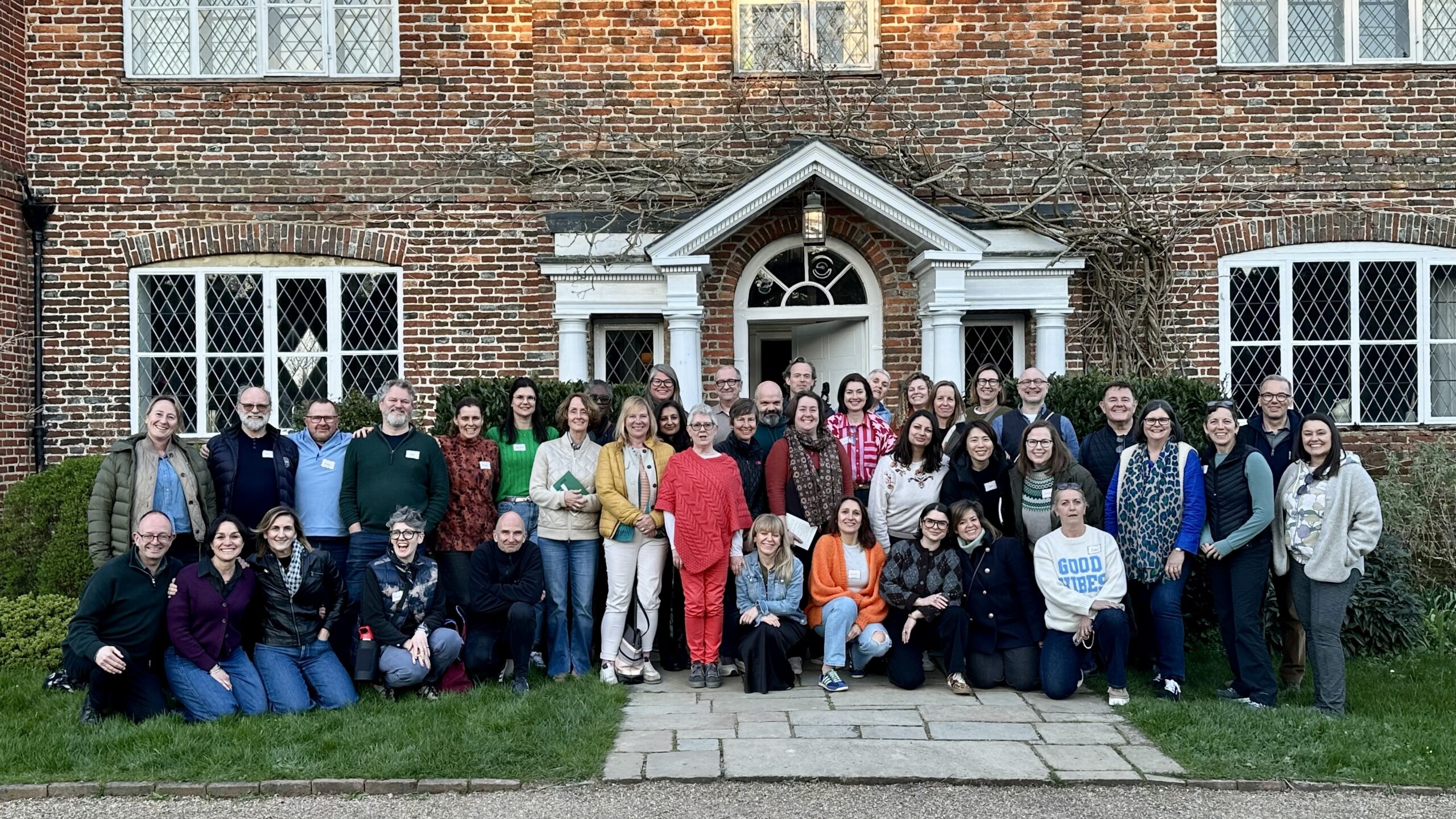
Thirdspace, who have led the PCC in London for the past 16 years, turned 21 this year. They celebrated the occasion with a residential gathering at beautiful Bore Place in Kent – nearly 50 community members from three continents, representing every year of their classes (see image below). It was joyous and uplifting, marked by the presence, generosity and care the PCC invites, and a wonderful opportunity to learn, play, dance and celebrate together. They’re now looking towards their 17th PCC which begins in July.
Congratulations to Justin, Neena, Lizzie, Amanda, Andy and Sue!
Graduate News
Personhood is the freedom to be oneself and to love what one is without possessing one’s being; to know one’s self in another.
Love is an embodied act, expressed in physical reality. To be itself, love must be for another
— Ilia Delio

Dear Stewards of Goodness,
This week we commenced the Spring Cohort of the Engaged Pathway. One activity we took up was being with another person, similar to the Learning to See Each Other exercise from Session 1 of the PCC. Only in this case, the guided meditation drew awareness to the sacred reciprocity of relationship. We explored the way in which there is only “We” and in this “We” can become more of a differentiated “I.” Said differently, union brings forward differentiation.
A few lines from the meditation:
Perhaps it’s their gentleness that calls forth your own tenderness… or their steadiness that invites you to rest… or their playfulness that awakens your joy…
Perhaps their courage highlights where you’ve been playing small… their vulnerability shows you where you’ve been armored… their authenticity reveals where you’ve been hiding
Rest in this recognition that every being you meet is a secret teacher, a hidden invitation, a doorway to your own becoming… And you, equally, are calling them forward into who they are…
This is the sacred reciprocity
I find our graduate community to be this, and it was spoken about and experienced in this session of the pathway. I also hear about the flavor of this through conversations with you when you speak about the kind of contact you experience with other graduates, yes, and as you move forward with others in your life.
May we continue to be transparent mirrors for each other, becoming more fully human along the way, and ushering in more love, justice and creativity.
Love,
Adam Klein (he/him)
Managing Partner & Senior Faculty
New Ventures West

Graduate Congratulations
Welcome New Graduates!
NVW PCC “H” February 20, 2025 — February 8, 2026
Alessandro Valera, Washington, DC
Amy Dyer, Sebastopol, CA
Brian Muma, Laguna Beach, CA
Bruce Wilkinson, Pottstown, PA
Caitlin Schwarzman, Alameda, CA
Eliza Patten, Berkeley, CA
Jaco Cohen. Berkeley, CA
Joanie Twersky, Decatur, GA
Lani Marsden, Berkeley, CA
Laura Carraway, Norfolk, VA
Lauren Harris, Ojal, CA
Lia Woertendyke, Oakland, CA
Myriah Johnson, Long Beach, CA
Myriam Fallon, Chicago, IL
Nate Pilson, Wilmington, DE
Nate Soule-Hill, Tucson, AZ
Sahar Saleem, Los Angeles, CA
Susanna Hunter (PCC “I”), Santa Rosa, CA
Tabitha Nelson, San Mateo, CA
Willem Overwijk, San Francisco, CA
Yue Zhao, San Jose, CA
Recent Blog Posts